high-pressure marmalade processing
process / process-high-pressure-marmalade
高圧マーマレード加工
High-pressure marmalade processing is an experimental marmalade-making process using high pressure instead of heating. It changes sensory qualities, color, aroma, and physical properties together.
Photographs (captions in Japanese)
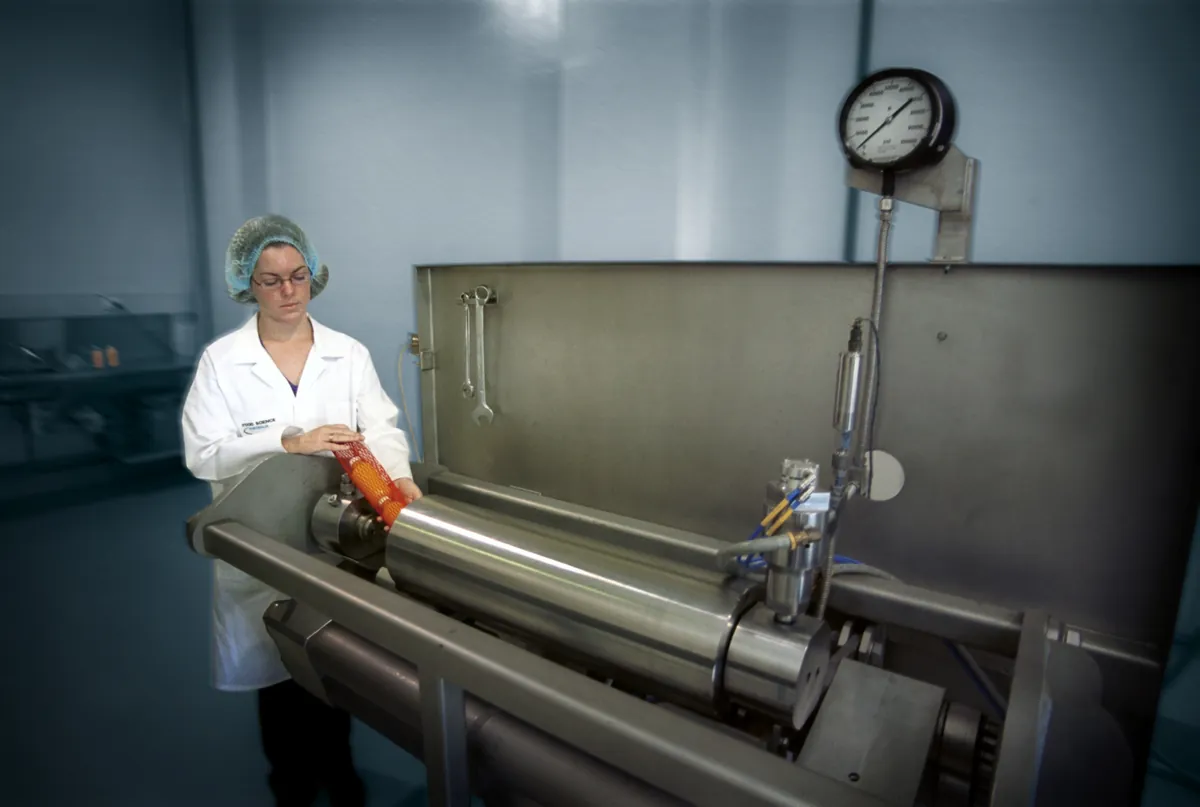
Bottles containing juice being loaded into a 2-liter high-pressure processing (HPP) unit at Food Science Australia (CSIRO). The file page itself describes the unit as high-pressure food processing equipment. It is a general record of high-pressure processing equipment and not a record of marmalade processing.
Shown: Not applicable (the process of high-pressure food processing)Part / state: Loading bottles into a high-pressure processing unit
Photo: North Sullivan Photography, CSIRO / CC BY 3.0 / original image / ledger's original image
Scope and provenance of the photo
Identification: Identified as labelled in the source. The subject is high-pressure processing of juice, not an example of application to marmalade.
Image shown: The full-size file from Wikimedia Commons. No cropping or color changes by NIGAMI LAB. For display, a WebP capped at 1200 px wide is served; the ledger's original image can be checked from the link above.
On this page (6 sections)
Reading the bitterness
High-pressure marmalade processing is an experimental way to make marmalade from yuzu peel using high pressure instead of heat. In a 2014 study, 27 students and faculty compared high-pressure and heat methods made with the same formulation, rating 14 attributes on a 5-point scale. The high-pressure method received a lower bitterness score, but the difference in bitterness strength is not stated as significant; what was significantly higher was the liking of the bitterness, the mouthfeel and the overall assessment (neither method included a debittering step such as soaking). Details of procedures such as blinding are limited, however, and several attributes changed simultaneously.
Indeed, bitterness was not the only attribute to change. In the same comparison, the high-pressure method produced stronger sweetness and sourness and better preserved color and yuzu-like aroma than the heat method. It should be understood as a process in which several sensory attributes were observed to shift together across the overall production method, including differences in pretreatment, packaging, and non-heating conditions, rather than a technique that selectively reduces bitterness.
Sources for this overview
Checked for this overview: Confirmed the lower bitterness score and higher liking in the comparison of 27 people. / Confirmed the simultaneous changes in sweetness, sourness, color, and aroma.
Follow the connections
yuzu peel marmalade →— perceived bitterness is s…→ high-pressure marmalade processing
Structured claims — open a section to read each claim's confidence, evidence and limits
Sensory (2)
Scope: The same formulation compared under high-pressure processing and heat processing by 27 students and staff
Note: The high-pressure method scored lower on bitterness, but the difference in bitterness strength is not stated as significant. What was significantly higher was the liking of the bitterness, the texture and the overall evaluation. Not reduced to the effect of high-pressure processing alone. 2026-10-20: re-read in chapter 2 of the doctoral thesis, separating the significance of bitterness strength, and lowered from supported to preliminary.
Show data
seasoning-yuzu-peel-marmalade —has_perceived_bitterness_suppressed_by→ process-high-pressure-marmaladeScope: High-pressure processing versus heat processing of yuzu marmalade
Note: Multiple attributes changed at the same time; this is not simply a technology for 『脱苦味だけ』 (in translation: "debittering alone").
Show data
process-high-pressure-marmalade —was_observed_with→ (the claim sentence above)