Radicchio di Chioggia early
ingredient / ingredient-radicchio-chioggia-early
早生キオッジャ / Cichorium intybus L. var. silvestre
Radicchio di Chioggia early is an early Chioggia type with a sweet to slightly bitter taste.
Photographs (captions in Japanese)
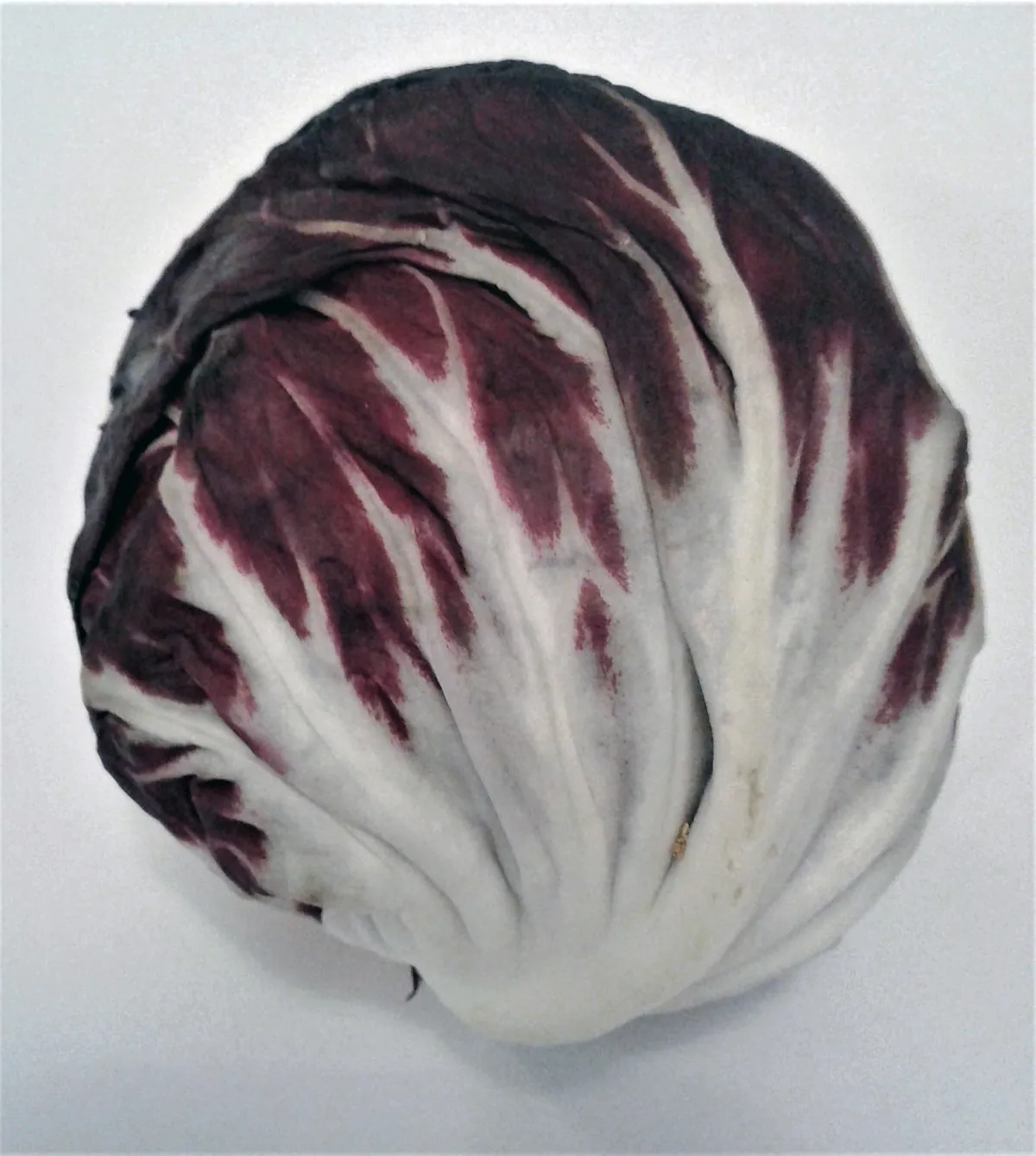
A typical round, headed plant of the Chioggia type of radicchio, stated as "Radicchio di Chioggia". Whether it is early or late type cannot be determined from the photograph.
Shown: Cichorium intybus L. var. silvestrePart / state: Headed plant (general type)
Photo: Jeangagnon / CC BY-SA 4.0 / original image / ledger's original image
Scope and provenance of the photo
Identification: Identified as labelled in the source. Based on the ruling, adopted as a photograph of a typical plant of the Chioggia type. A different Commons file is used for the late type (ingredient-radicchio-chioggia-late) to avoid duplication.
Image shown: No resizing, trimming, or color changes. The original image from Wikimedia Commons is used as it is. For display, a WebP capped at 1200 px wide is served; the ledger's original image can be checked from the link above.
On this page (6 sections)
Reading the bitterness
The 2008 EU geographical-indication (PGI) specification describes the early type of Radicchio di Chioggia as having crispy leaves with a sweet to slightly bitter taste. This early type is positioned as the category harvested earlier among Chioggia types.
The relevant provision in the original 2003 production specification (disciplinare) describes leaves of the precoce type as 『sapore dolce o leggermente amarognolo e di consistenza croccante(甘味または軽い苦味の味わい、パリッとした食感)』 (in translation: "a sweet or slightly bitter taste and a crisp texture"). Both the English and Italian versions remain descriptions in a standards document, not intensity measurements by a trained sensory panel.
In an analytical-chemistry study of the Rosso di Chioggia variety as a whole, without distinguishing early and late types, guaianolides (including lactucopicrin) and sugars were examined by HPTLC (high-performance thin-layer chromatography), mainly in the edible head. A method was established to relate sensory bitterness ratings of the head to those analytical data. However, the abstract does not provide specific concentration figures and does not distinguish early from late types.
Sources for this overview
Summary of requirements: Radicchio di Chioggia PGI
Checked for this overview: Checked the sensory description of the early type in the English version of the EU PGI specification.
Disciplinare di produzione - Radicchio di Chioggia IGP
Checked for this overview: Checked the sensory description of the precoce type in the original Italian disciplinare.
Checked for this overview: The method relating guaianolide analysis of the head to sensory bitterness ratings.
Structured claims — open a section to read each claim's confidence, evidence and limits
Composition and content (1)
Scope: Layer: Food. A study comparing guaianolide and sugar content by HPTLC across the head (market portion), outer leaves, and root of 3 lines of Rosso di Chioggia (red Chioggia type), and correlating the head's sensory bitterness rating with this composition. This source addresses the Rosso di Chioggia variety as a whole and does not distinguish early from late types.
Show data
ingredient-radicchio-chioggia-early —contains→ (the claim sentence above)Sensory (1)
Scope: The early type under the EU specification
Note: Keeps the range expression "sweet to slightly bitter".
Show data
ingredient-radicchio-chioggia-early —has_sensory_attribute→ (the claim sentence above)