Cicoria selvatica (wild chicory greens)
ingredient / ingredient-cicoria-selvatica
チコリア・セルヴァティカ / Cichorium intybus L.
Wild chicory leaves, young flowering stems, and roots gathered by hand in southern Italy. Listed in the Puglia PAT register as , with regional names cicoriella cresta, ciucrèdde, and cequeréedde.
Photographs (captions in Japanese)
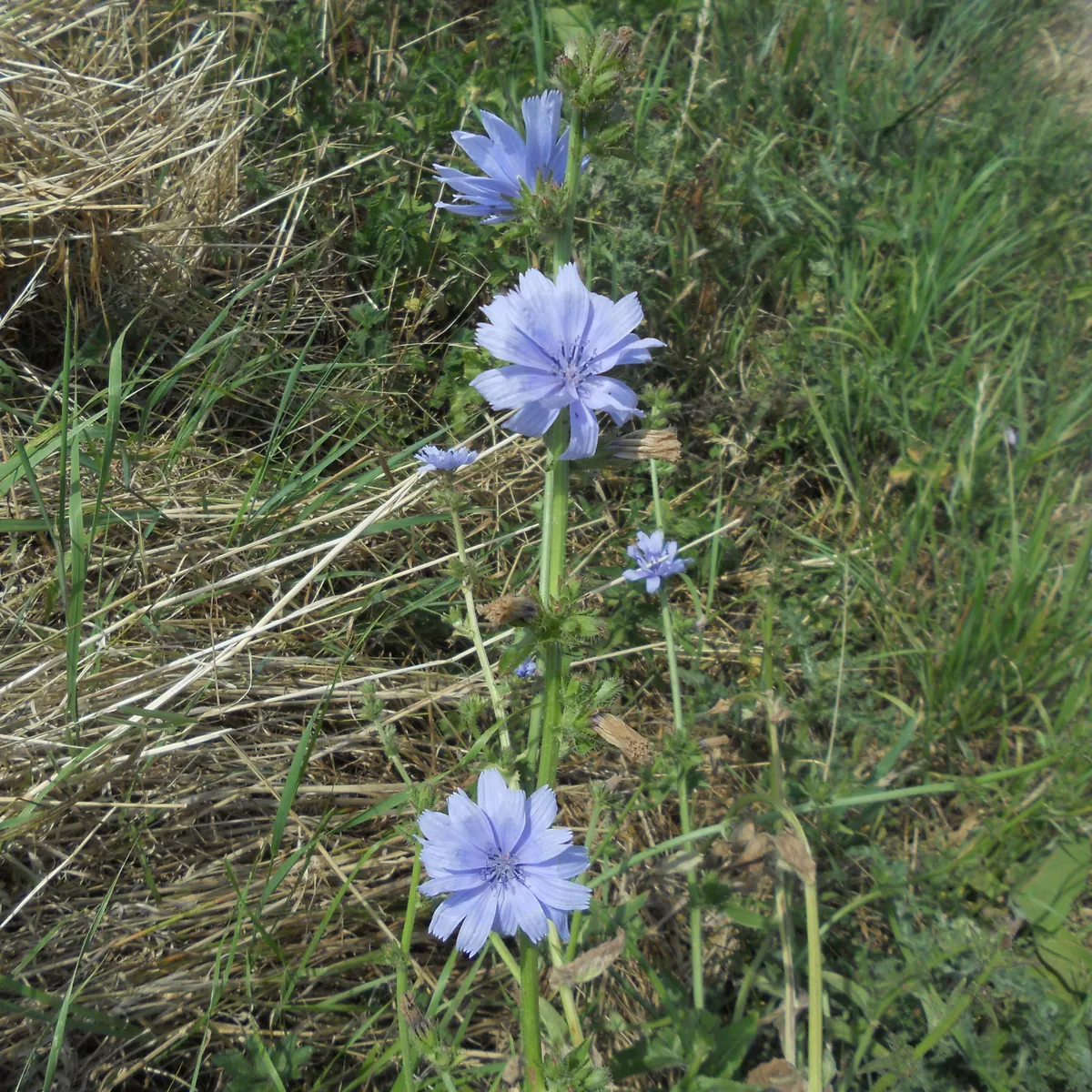
A flowering plant of wild chicory (Cichorium intybus). Wild chicory hand-picked in Apulia as cicoria selvatica / cicoriella is described as including this species, but the photograph itself was taken in the United Kingdom and does not show a specific population collected in Apulia.
Shown: Cichorium intybus (wild chicory)Part / state: Plant in flower
Photo: ITookSomePhotos / CC BY-SA 4.0 / original image / ledger's original image
Scope and provenance of the photo
Identification: Identified as labelled in the source. The shooting location is the Isle of Wight, United Kingdom. No photograph of a plant from Apulia could be found on Commons.
Image shown: The full-size file from Wikimedia Commons. No cropping or color changes by NIGAMI LAB. For display, a WebP capped at 1200 px wide is served; the ledger's original image can be checked from the link above.
On this page (7 sections)
Reading the bitterness
According to the Puglia register of traditional agri-food products (PAT), 『Cicorie selvatiche o cicorielle』 is identified as Cichorium intybus L., with regional names cicoriella cresta, ciucrèdde, and cequeréedde. The edible parts are roots, leaves, and flowers; the register gives 10 kcal per 100 g of edible portion and describes it as rich in potassium and vitamin B2.
The same PAT record describes harvesting wild plants by hand with a knife, selecting plants known to be edible, removing soil, and washing them repeatedly. The harvest season is described as October through April; the record says farmers ate them raw as 『spincituru』 (in translation: "a side dish"). It lists 『fave e cicorie』 (in translation: "fava beans and chicory") among the best-known recipes of Puglia's regional cuisine.
The Italian dictionary Treccani defines the noun 『ripassata』 (in translation: "a quick re-sauté") as quickly re-sautéing already boiled food in a pan, and gives an example involving boiled green beans (fagiolini). That example is not about chicory, and the dictionary does not itself list 『cicoria ripassata』 (in translation: "re-sautéed chicory") as a dish title.
Sources for this overview
Cicorie selvatiche o cicorielle
Checked for this overview: Checked the recorded scientific and regional names, edible parts, and nutritional values. / Checked the hand-harvesting method and traditional name for raw consumption.
Ripassata — Significato ed etimologia
Checked for this overview: Checked the dictionary definition of ripassata and the scope of its example.
Other names: Cicoria selvatica (it), Cicoriella cresta (it, identification medium), Ciucrèdde (it, identification medium), Cequeréedde (it, identification medium)
Structured claims — open a section to read each claim's confidence, evidence and limits
Composition and content (1)
Scope: The Puglia PAT record for 『Cicorie selvatiche o cicorielle』.
Note: Dialect spellings are preserved exactly as written in the source.
Show data
ingredient-cicoria-selvatica —is_a→ (the claim sentence above)How processing and cooking change it (2)
Scope: The 『ripassata』 entry in Treccani Vocabolario.
Note: The dictionary example itself is not about chicory. This is recorded only as a general definition of the technique; the dictionary does not directly list a dish called 『cicoria ripassata』 (in translation: "re-sautéed chicory").
Show data
ingredient-cicoria-selvatica —is_prepared_by→ (the claim sentence above)Scope: The Puglia PAT record; harvest season from October to April.
Note: Based on a single administrative record; regional and household variations were not checked.
Show data
ingredient-cicoria-selvatica —is_eaten_as→ (the claim sentence above)