phak khayaeng (rice paddy herb)
organism / organism-limnophila-aromatica
パックカヤエン / Limnophila aromatica (Lam.) Merr.
Phak khayaeng (rice paddy herb) is a strongly aromatic waterside herb also called ผักพา (phak pha) in the north. Served raw with larb, koi, som tam, and other dishes, and used to mask off-odors in bamboo-shoot dishes and stews.
Photographs (captions in Japanese)
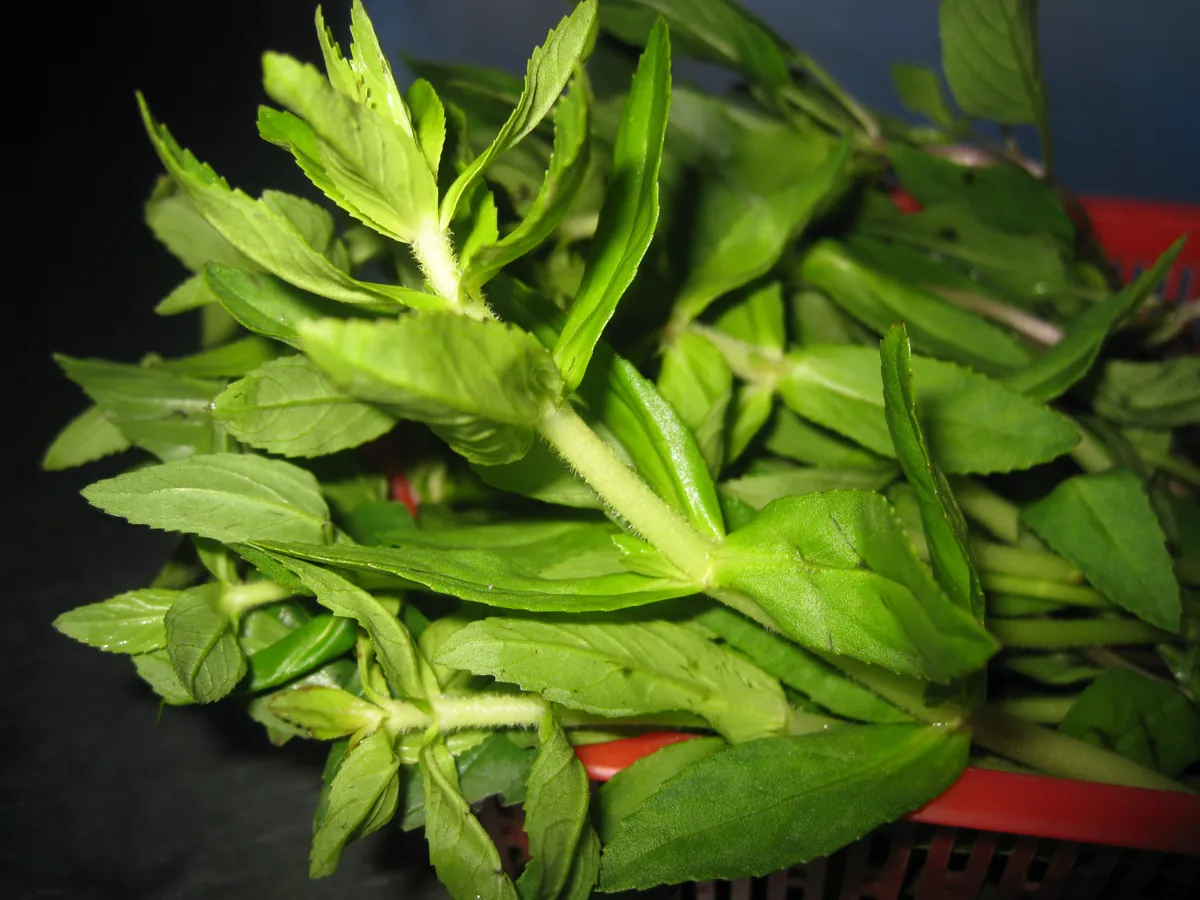
A plant of pak khayaeng (Limnophila aromatica). Also called phak khayaeng in northern Thailand, a strongly aromatic aquatic herb served raw as a garnish with laap, koi, som tam, and other dishes.
Shown: Limnophila aromatica (pak khayaeng, rice paddy herb)Part / state: Plant
Photo: Nguyễn Thanh Quang / CC BY-SA 3.0 / original image / ledger's original image
Scope and provenance of the photo
Identification: Identified as labelled in the source.
Image shown: The full-size file from Wikimedia Commons. No cropping or color changes by NIGAMI LAB. For display, a WebP capped at 1200 px wide is served; the ledger's original image can be checked from the link above.
On this page (7 sections)
Reading the bitterness
Phak khayaeng (Limnophila aromatica), also called phak pha in northern Thailand, is a strongly aromatic herb growing near water. A university page compiling regional knowledge says that breaking its stems or leaves releases a sharp aroma and pungency. This entry describes aroma and pungency, not bitterness.
According to the same page, the whole plant, young shoots, and young leaves are eaten raw alongside larb, koi, jaeo, nam phrik, som tam, and bamboo-shoot soup. It also describes their use to add aroma and mask off-odors in sour soup, bamboo-shoot curry, and herb-rich stews.
Another entry in this encyclopedia records a region-specific form of larb made bitter with intestinal contents or bile. This source, however, refers only to larb in general and does not distinguish which form accompanies this herb. The descriptions of pungency and aroma come from a regional-knowledge page, not measurements by a sensory panel.
Sources for this overview
ผักแขยง สรรพคุณและประโยชน์ของผักแขยง
Checked for this overview: The university-run page describes a strong aroma and pungency released when the plant is broken. / The page describes serving it with larb, koi, and other foods and using it to mask off-odors in sour soup or curry. / The source refers to larb in general without distinguishing its bitter forms. / A methodological limit: the description comes from a regional-knowledge page, not a sensory panel.
Other names: ผักแขยง (th), phak khayaeng (th-Latn), ผักพา (th, identification medium), Limnophila aromatica (Lam.) Merr. (la)
Structured claims — open a section to read each claim's confidence, evidence and limits
Sensory (1)
Scope: Suan Sunandha Rajabhat University’s regional-knowledge page.
Show data
organism-limnophila-aromatica —has_sensory_attribute→ (the claim sentence above)How processing and cooking change it (1)
Scope: Suan Sunandha Rajabhat University’s regional-knowledge page.
Show data
organism-limnophila-aromatica —is_eaten_as→ (the claim sentence above)