Indian trumpet tree
organism / organism-oroxylum-indicum
ソリザヤノキ / Oroxylum indicum / Oroxylum indicum
Sorizaya-no-ki (Indian trumpet tree), whose immature pods are distributed and eaten as a vegetable in northeastern Thailand.
Photographs (captions in Japanese)
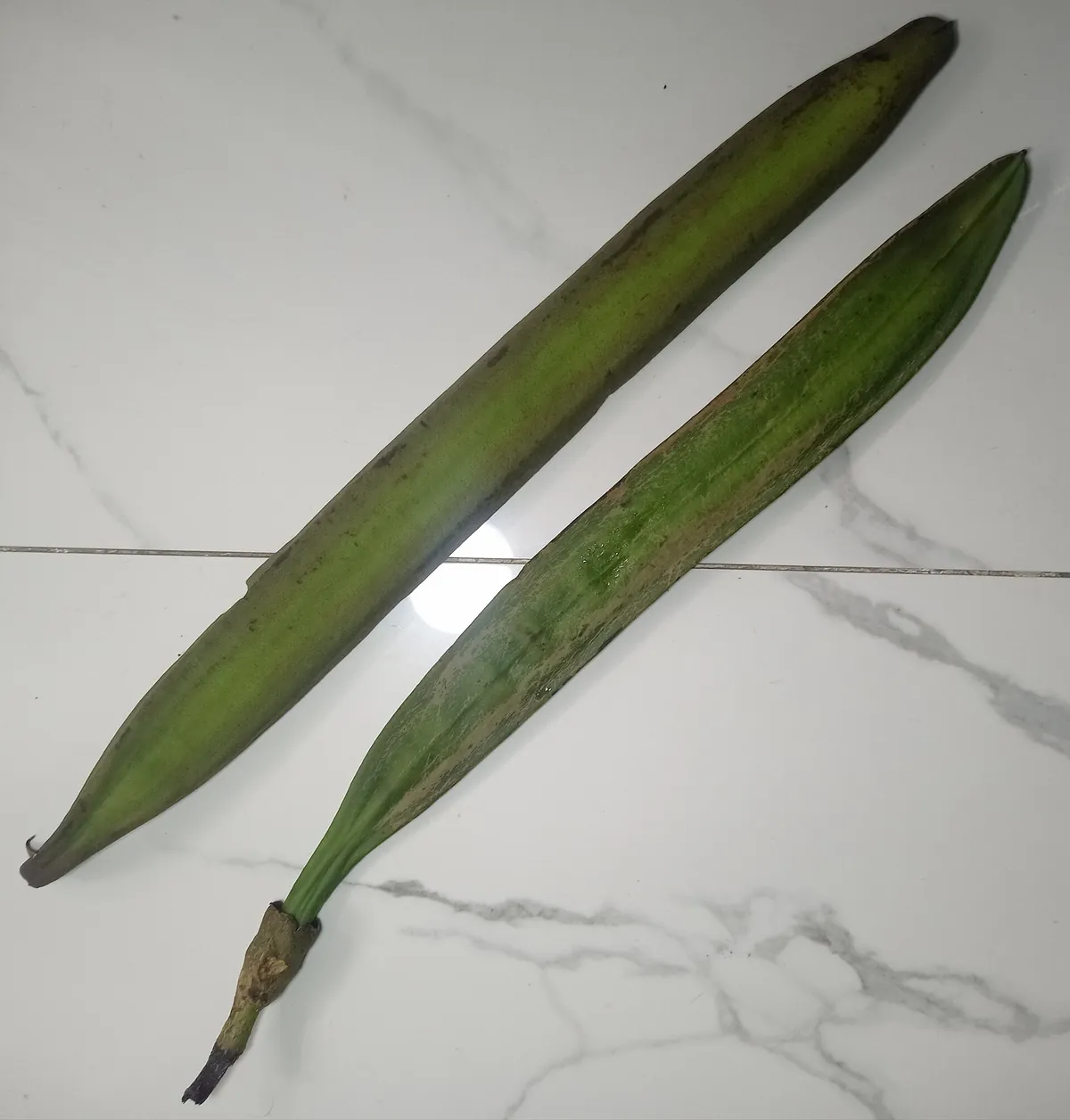
Young fruits (pods) of Oroxylum indicum. 2 long, flat, sword-shaped pods are placed on a stand.
Shown: Oroxylum indicumPart / state: 2 harvested young pod-like fruits
Photo: SarKaLay / CC BY-SA 4.0 / original image / ledger's original image
Scope and provenance of the photo
Identification: Identified as labelled in the source. The source caption describes it as fruit of the "broken bones tree" (English common name). Re-identification by a specialist has not been done.
Image shown: The 1920 px version from Wikimedia Commons. No cropping or color changes by NIGAMI LAB. For display, a WebP capped at 1200 px wide is served; the ledger's original image can be checked from the link above.
On this page (9 sections)
Reading the bitterness
Sorizaya-no-ki (Indian trumpet tree, scientific name Oroxylum indicum) is a tree whose immature pods are roasted and eaten as a local vegetable in northeastern Thailand. A 2024 study states as background that these pods are sold in local markets there. The starting point is that the pod is treated as an edible part, rather than any identification of the principal source of its bitterness.
The same study detected the flavones baicalin and baicalein in ethanol extracts of the pods. Baicalein was 2.57±0.23% w/w in the short-stem form and 0.89±0.15% w/w in the long-stem form, while baicalin was 2.37±0.67% w/w and 2.36±0.39% w/w, respectively. Chrysin and oroxylin A were below the detection limit. These are concentrations in extracts, not in fresh pods, and the source does not establish how these flavones contribute to pod bitterness.
Sources for this overview
Checked for this overview: Confirmed the description of roasted immature pods distributed as a local vegetable in markets of northeastern Thailand. / Confirmed HPLC quantification of baicalin, baicalein, and other compounds in pod extracts.
Follow the connections
Indian trumpet tree →contains→ baicalein
Measured values (2)
| Kind | Compound | Target | Value | Conditions | Source |
|---|---|---|---|---|---|
| concentration | baicalein | Indian trumpet tree | 2.57±0.23 % w/w (extract) | Pod ethanol extract (HPLC quantification). (Panomai 2024, Table 3. Not a concentration in fresh pods.) | Panomai P, 2024 |
| concentration | baicalein | Indian trumpet tree | 0.89±0.15 % w/w (extract) | Pod ethanol extract (HPLC quantification). (Panomai 2024 Table 3) | Panomai P, 2024 |
Values are the reported values of each source (with units and conditions). Thresholds and EC50 depend on the panel and method; they are not single true values.
Structured claims — open a section to read each claim's confidence, evidence and limits
Composition and content (1)
Scope: Ethanol extracts of pods from 2 phenotypes in Khon Kaen.
Note: The contribution of these flavones to bitterness was not tested in this source.
Show data
organism-oroxylum-indicum —contains→ compound-baicaleinHow processing and cooking change it (1)
Scope: Thailand, particularly the northeast.
Show data
organism-oroxylum-indicum —is_eaten_as→ (the claim sentence above)Culture (1)
Scope: A general-audience article from the Highland Research and Development Institute (HRDI).
Show data
organism-oroxylum-indicum —is_documented_as_part_of→ (the claim sentence above)