Dolichos lablab (Lablab purpureus)
organism / organism-dolichos-lablab
フジマメ / Lablab purpureus (L.) Sweet [syn. Dolichos lablab L.]
Dolichos lablab (Lablab purpureus) is a traditional legume vegetable whose young pods are eaten (Thai name: ถั่วแปบ, thua paep). "paep" is described as an old word referring to the flat shape of the pod (Mo Chao Ban magazine, 1997). Some material suggests a possible shared word root with ผักแปบ (phak paep, one recorded name for the Chiang Mai bitter green still being identified), but this source records it only as ถั่ว (a bean), with no separate attestation as ผัก (a leafy vegetable); the two are therefore not identified as the same plant.
Photographs (captions in Japanese)
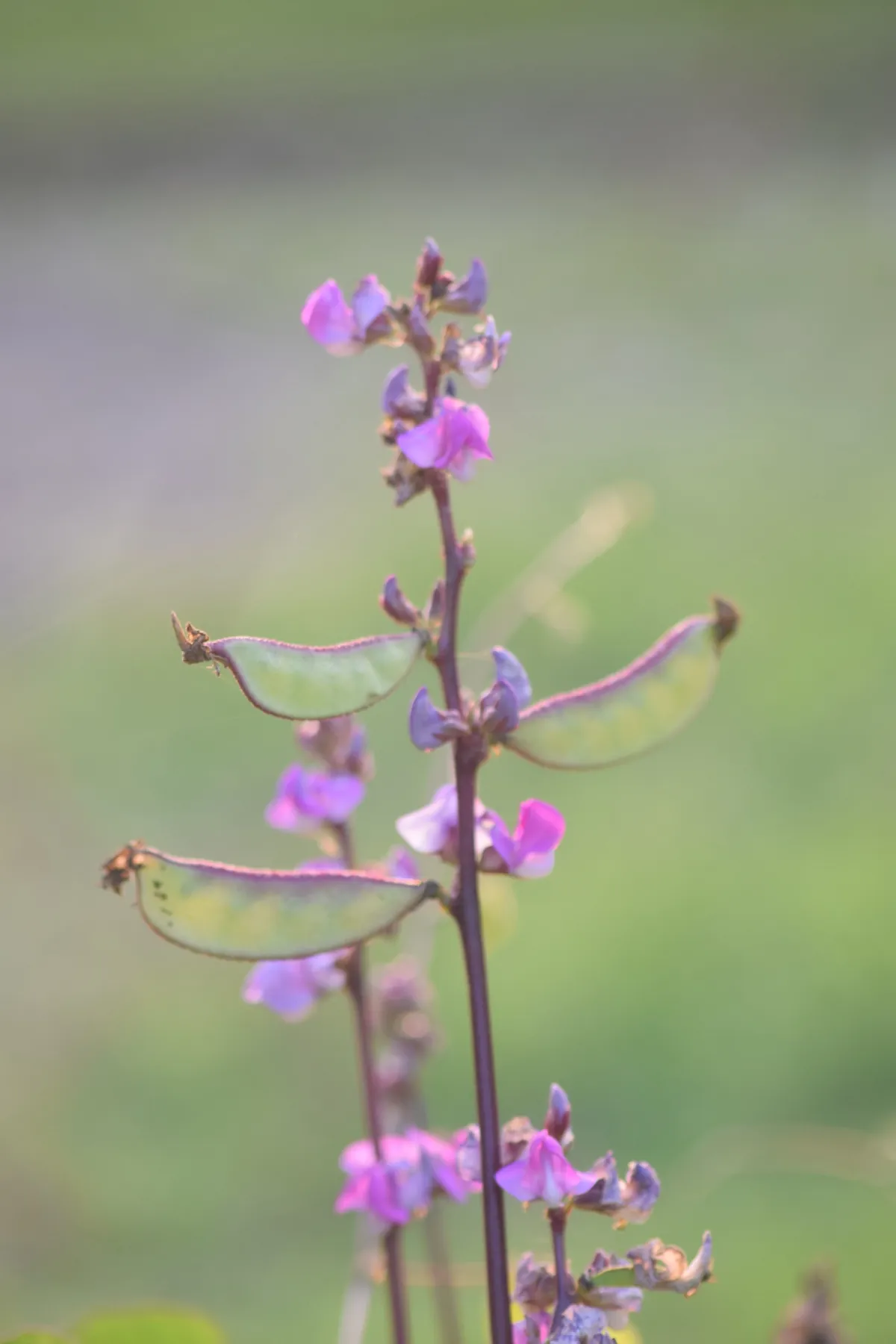
Purple flowers and young pods of Dolichos lablab (current scientific name Lablab purpureus). Photographed in Bangladesh, so it is a proxy photograph of the same species, not one taken in Thailand.
Shown: Lablab purpureus (L.) Sweet [syn. Dolichos lablab L.]Part / state: Flowers and young pods
Photo: Md. Mahian / CC BY-SA 4.0 / original image / ledger's original image
Scope and provenance of the photo
Identification: Identified as labelled in the source. A photograph of a plant of the same species (scientific name matches), but the shooting location is Bangladesh, not Thailand.
Image shown: Resized by NIGAMI LAB to 2400 px on the long side with sips (the original is 6000x4000 px). No trimming or color changes. For display, a WebP capped at 1200 px wide is served; the ledger's original image can be checked from the link above.
On this page (7 sections)
Reading the bitterness
ถั่วแปบ (thua paep; Dolichos lablab, scientific name Lablab purpureus) is a legume whose young pods are eaten. 「แปบ」 (in translation: "paep") is described as an old word for the flat shape of the pod, an etymology introduced in a 1997 article on traditional agriculture. The article uses the form 「ถั่ว(豆)」 (in translation: "thua [bean]"); no mention of the form 「ผัก(葉物野菜)」 (in translation: "phak [leafy vegetable]") was found.
The young pods are boiled and eaten alongside chili paste, fermented fish, or sour fish dishes. The same 1997 article records their use in orange curry in central Thailand and sour soup in northeastern Thailand, suggesting different culinary uses by region.
Sources for this overview
ถั่วแปบ ผักพื้นบ้านชื่อไทยโบราณ
Checked for this overview: Confirmed the explanation that แปบ (paep) is an old word referring to the pod’s flat shape. / Confirmed the description of boiled young pods and their regional culinary uses.
Other names: ถั่วแปบ (th), thua paep (th-Latn)
Structured claims — open a section to read each claim's confidence, evidence and limits
Composition and content (1)
Scope: Throughout Thailand (including northern names).
Note: 「แปบ」 (in translation: "paep") is described as an old word referring to the flat shape of the pod. The similarity in word roots to 「ผักแปบ」 (in translation: "phak paep"), a candidate name recalled by Masaru, merits examination, but this source uses 「ถั่ว(豆)」 (in translation: "thua [bean]"); the form 「ผัก」 (in translation: "phak [leafy vegetable]") was not found. It is not identified as the same as ingredient-chiangmai-green-candidate.
Show data
organism-dolichos-lablab —is_listed_as→ (the claim sentence above)How processing and cooking change it (1)
Scope: Throughout Thailand.
Note: Described in a 1997 article in หมอชาวบ้าน (Mo Chao Ban) magazine.
Show data
organism-dolichos-lablab —is_eaten_as→ (the claim sentence above)