Ixeris dentata
organism / organism-ixeris-dentata
ニガナ
Nigana (Korean name 씀바귀, ssumbagwi), a daisy-family plant eaten in Asia. Synonym: Ixeridium dentatum.
Photographs (captions in Japanese)
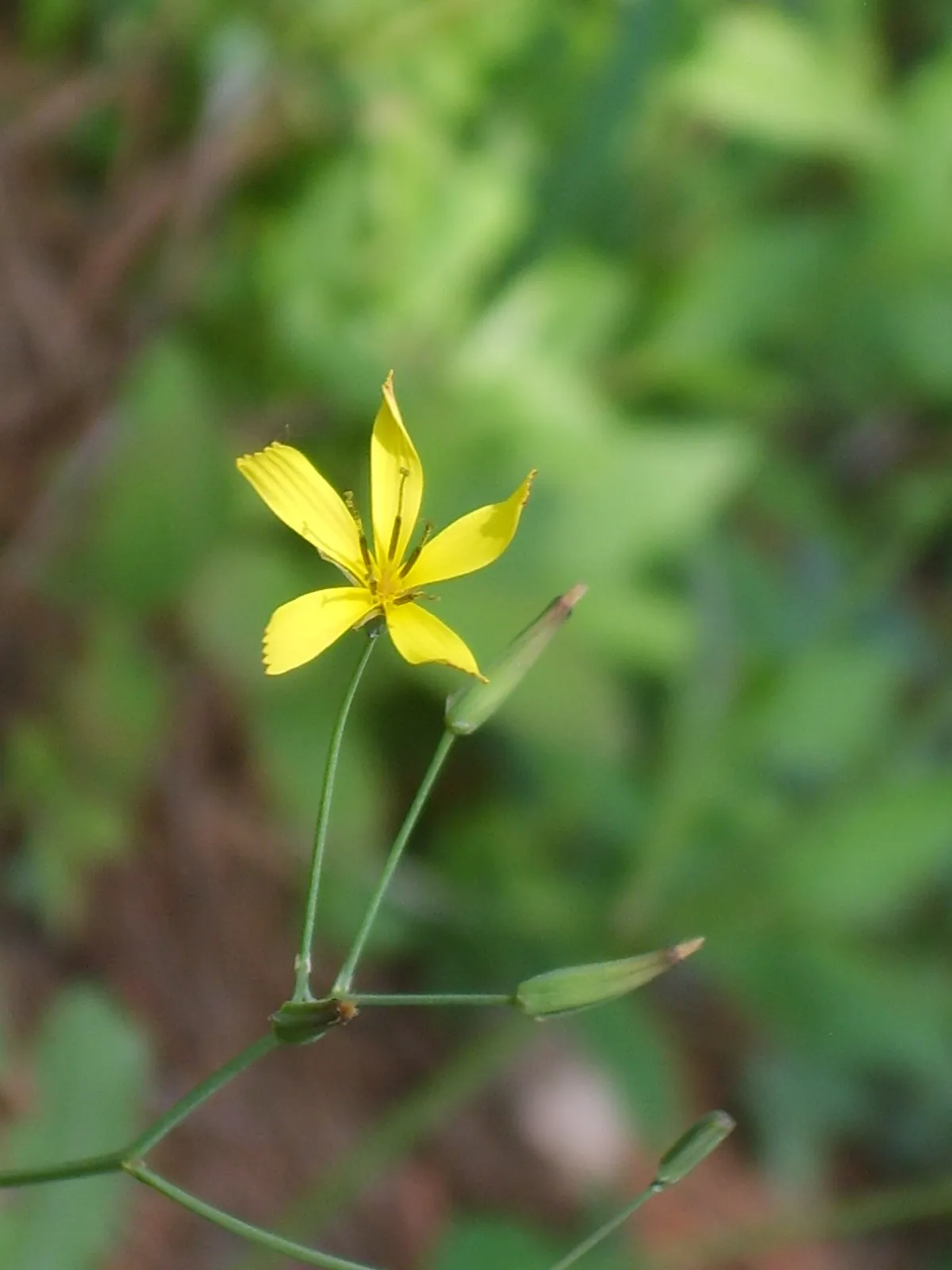
Flowers of Ixeris dentata (nigana). A single yellow flower head blooming at the tip of a thin flower stalk and adjacent buds are shown.
Shown: Ixeris dentata (Thunb. ex Thunb.) NakaiPart / state: A single flower head in bloom (ray florets) and buds
Photo: Dalgial / CC BY-SA 3.0 / original image / ledger's original image
Scope and provenance of the photo
Identification: Identified as labelled in the source. The source describes it as a plant photographed in Incheon, South Korea. Re-identification by a specialist has not been done.
Image shown: The 1920 px version from Wikimedia Commons. No cropping or color changes by NIGAMI LAB. For display, a WebP capped at 1200 px wide is served; the ledger's original image can be checked from the link above.
On this page (9 sections)
Reading the bitterness
Nigana (Ixeris dentata; Korean name 씀바귀, ssumbagwi) is a daisy-family plant described as a well-known edible vegetable in Asia. An encyclopedia entry from the Academy of Korean Studies introduces it as one of the representative spring namul whose roots and young leaves are gathered and eaten in early spring.
A study analyzing the roots identified 7 sesquiterpene lactone glucosides belonging to the guaianolide and germacranolide groups (classes of plant constituents often associated with bitterness) by HPLC-MS/MS. These are in the same class of compounds as lactucins in chicory. Their content was reported to vary significantly by place of origin within Korea, but the study did not examine a relationship with perceived bitterness.
Sources for this overview
Checked for this overview: Checked its description as an edible vegetable in Asia. / Checked the 7 root sesquiterpene lactone glucosides and variation among places of origin.
Checked for this overview: Checked the account of eating its roots and young leaves as spring namul in early spring.
Other names: 씀바귀 (ko), Ixeris dentata (Thunb. ex Thunb.) Nakai (la), Ixeridium dentatum (Thunb.) Tzvelev (la)
Follow the connections
ssumbagwi greens →is used as→ Ixeris dentata
Structured claims — open a section to read each claim's confidence, evidence and limits
Composition and content (1)
Scope: Roots from 6 regions of Korea.
Note: In the same sesquiterpene lactone class as the lactucin compounds in chicory. A contribution to bitterness was not tested in this source.
Show data
organism-ixeris-dentata —contains→ (the claim sentence above)How processing and cooking change it (1)
Scope: Asia (the analyzed samples were roots from 6 regions of Korea).
Show data
organism-ixeris-dentata —is_eaten_as→ (the claim sentence above)Culture (1)
Scope: Spring namul in Korea, where roots and young leaves are eaten in early spring
Note: Connected to the public encyclopedia of the Academy of Korean Studies.
Show data
ingredient-ssumbagwi-greens —is_used_as→ organism-ixeris-dentata