ashitaba
ingredient / ingredient-ashitaba
明日葉 / Angelica keiskei
Ashitaba. An official regional record describes its use in the Izu Islands in dishes such as ohitashi (blanched greens) and tempura.
Photographs (captions in Japanese)
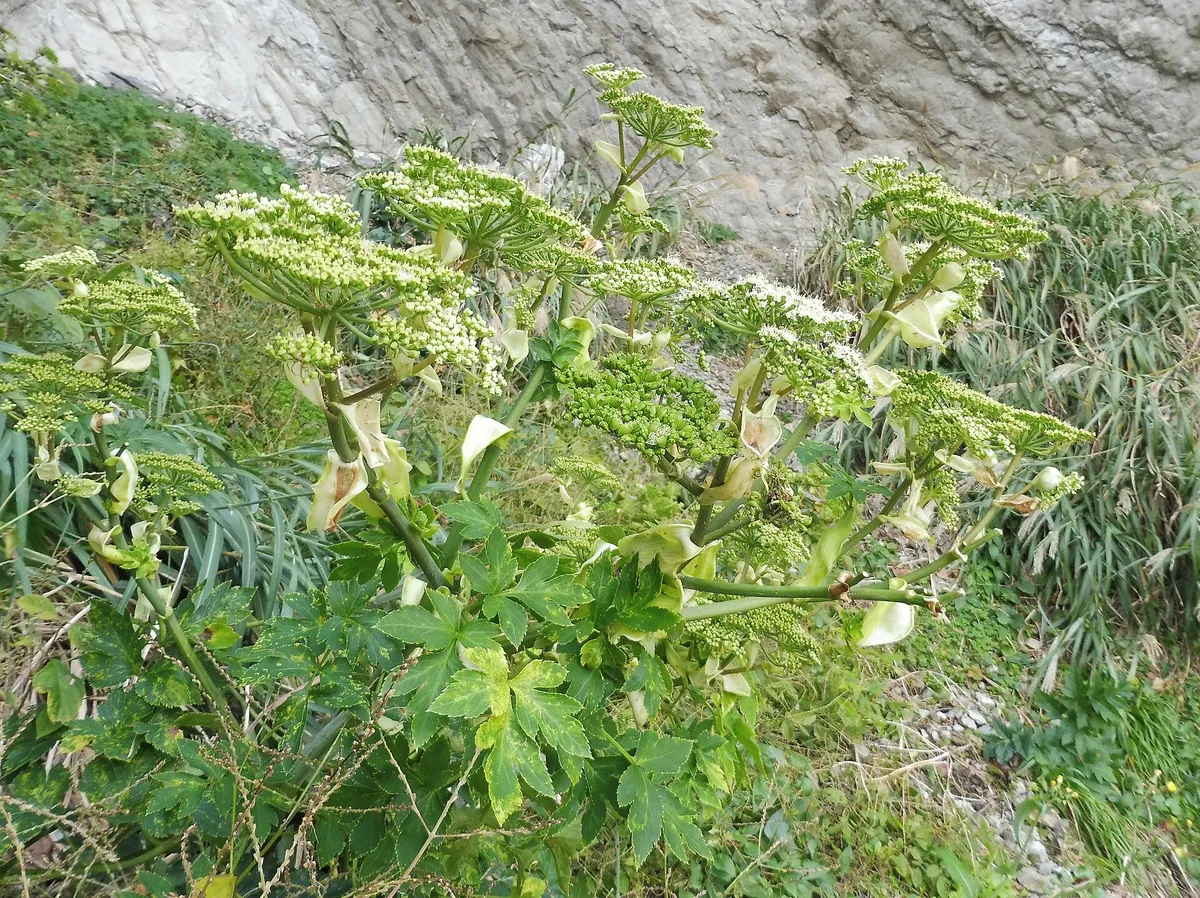
Ashitaba (Angelica keiskei). A plant in flower growing wild on coastal rocks east of Miyagawa Bay. The young leaves and stems are mainly what is eaten; this photograph shows a mature flowering plant.
Shown: Angelica keiskeiPart / state: The whole ashitaba plant in flower. Several stems rise, each with a white umbel at the tip and pinnate compound leaves thick at the bottom. Growing wild on coastal rocks
Photo: Mason Brock (Masebrock) / Public domain / original image / ledger's original image
Scope and provenance of the photo
Identification: Identified as labelled in the source. The source caption gives only the shooting location (coastal rocks east of Miyagawa Bay). The scientific name Angelica keiskei follows the source, and re-identification by a specialist has not been done. The photograph shows the whole plant in flower and is not a photograph of the edible parts (young leaves and young stems) themselves.
Image shown: The 1920 px version from Wikimedia Commons. No cropping or color changes by NIGAMI LAB. For display, a WebP capped at 1200 px wide is served; the ledger's original image can be checked from the link above.
On this page (7 sections)
Reading the bitterness
「明日葉」 (ashitaba, Angelica keiskei) grows wild in the Izu Islands. A Cabinet Office record introducing island tourism and culture lists it as a regional specialty used in a wide range of dishes, including ohitashi (blanched greens) and tempura. The record concerns its use as an ingredient and says nothing about bitterness itself; within the material checked here, whether ashitaba is a bitter ingredient remains unsubstantiated.
The same official record names tempura as one dish made with ashitaba. It is a regional introduction, however, not a recipe giving detailed ingredient proportions or steps, nor a quantitative study of how often each dish is made or how bitter it is.
Sources for this overview
Checked for this overview: Checked the record's classification of ashitaba as an Izu Islands specialty and its examples of dishes. / Checked that tempura is listed as an ashitaba dish and that the record lacks detail.
Follow the connections
ashitaba tempura →includes→ ashitaba
Structured claims — open a section to read each claim's confidence, evidence and limits
How processing and cooking change it (1)
Scope: An official Cabinet Office regional record.
Note: Not a recipe giving detailed proportions.
Show data
dish-ashitaba-tempura —includes→ ingredient-ashitabaCulture (1)
Scope: Cabinet Office record of remote-island tourism and culture
Note: Not a sensory measurement of bitterness.
Show data
ingredient-ashitaba —is_consumed_in→ (the claim sentence above)