ssumbagwi greens
ingredient / ingredient-ssumbagwi-greens
スンバグィ(씀바귀)
Ssumbagwi greens: a spring namul ingredient in Korea using the roots and young leaves of 씀바귀 (Ixeris dentata). Records describe briefly boiling it and soaking it in water to adjust its bitterness.
Photographs (captions in Japanese)
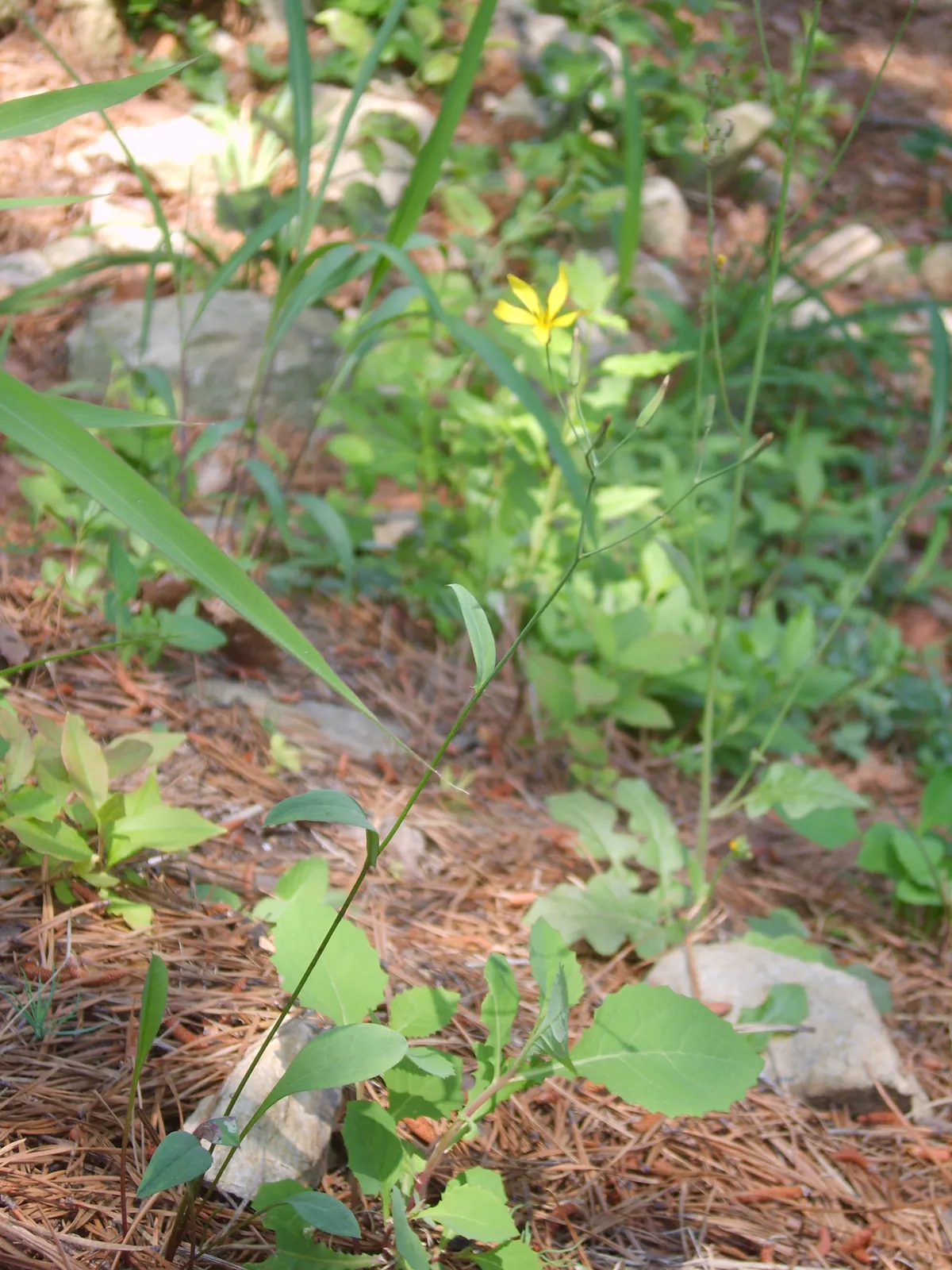
The whole plant of Ixeris dentata (ssumbagwi, 씀바귀). The scientific name matches exactly the subject described (the root and young leaves of Korean ssumbagwi used as a food ingredient).
Shown: Ixeris dentataPart / state: Whole plant (flowers and leaves)
Photo: Dalgial / CC BY-SA 3.0 / original image / ledger's original image
Scope and provenance of the photo
Identification: Identified as labelled in the source.
Image shown: No resizing, trimming, or color changes. The original image from Wikimedia Commons is used as it is. For display, a WebP capped at 1200 px wide is served; the ledger's original image can be checked from the link above.
On this page (7 sections)
Reading the bitterness
Ssumbagwi (씀바귀) is a spring-heralding namul ingredient in Korea using the roots and young leaves of the plant Ixeris dentata. An encyclopedia entry published by the Academy of Korean Studies introduces this vegetable as a representative early-spring namul whose roots and young leaves are gathered.
The same entry states that the roots and young leaves are briefly boiled and soaked in water to remove bitterness, then stir-fried or seasoned before eating. It gives no boiling or soaking duration and does not state how much bitterness remains afterward; differences in eating frequency by region or household cannot be determined from the encyclopedia's general description.
Sources for this overview
Checked for this overview: The scope in which the encyclopedia description of eating roots and young leaves as spring namul was confirmed. / The scope in which the description as a representative spring namul gathered in early spring was confirmed. / The scope in which the process of briefly boiling and soaking in water to remove bitterness was confirmed.
Follow the connections
ssumbagwi greens →is used as→ Ixeris dentata
Hypotheses and recipe candidates for this entry are on the Japanese page.
Structured claims — open a section to read each claim's confidence, evidence and limits
How processing and cooking change it (2)
Scope: Public encyclopedia of the Academy of Korean Studies
Note: Eating frequency by region or cultivar is not given.
Show data
ingredient-ssumbagwi-greens —is_eaten_as→ (the claim sentence above)Scope: a public encyclopedia from the Academy of Korean Studies
Note: Time, temperature, and residual bitterness are not quantified.
Show data
ingredient-ssumbagwi-greens —is_prepared_by→ (the claim sentence above)Culture (1)
Scope: Spring namul in Korea, where roots and young leaves are eaten in early spring
Note: Connected to the public encyclopedia of the Academy of Korean Studies.
Show data
ingredient-ssumbagwi-greens —is_used_as→ organism-ixeris-dentata