Japonicalia delphiniifolia
ingredient / ingredient-shidoke
しどけ
Japonicalia delphiniifolia is a wild edible Asteraceae plant called "shidoke" in Tohoku; its young stems and leaves are eaten. Websites describe it as a wild green with a butterbur-like aroma and slight bitterness.
Photographs (captions in Japanese)
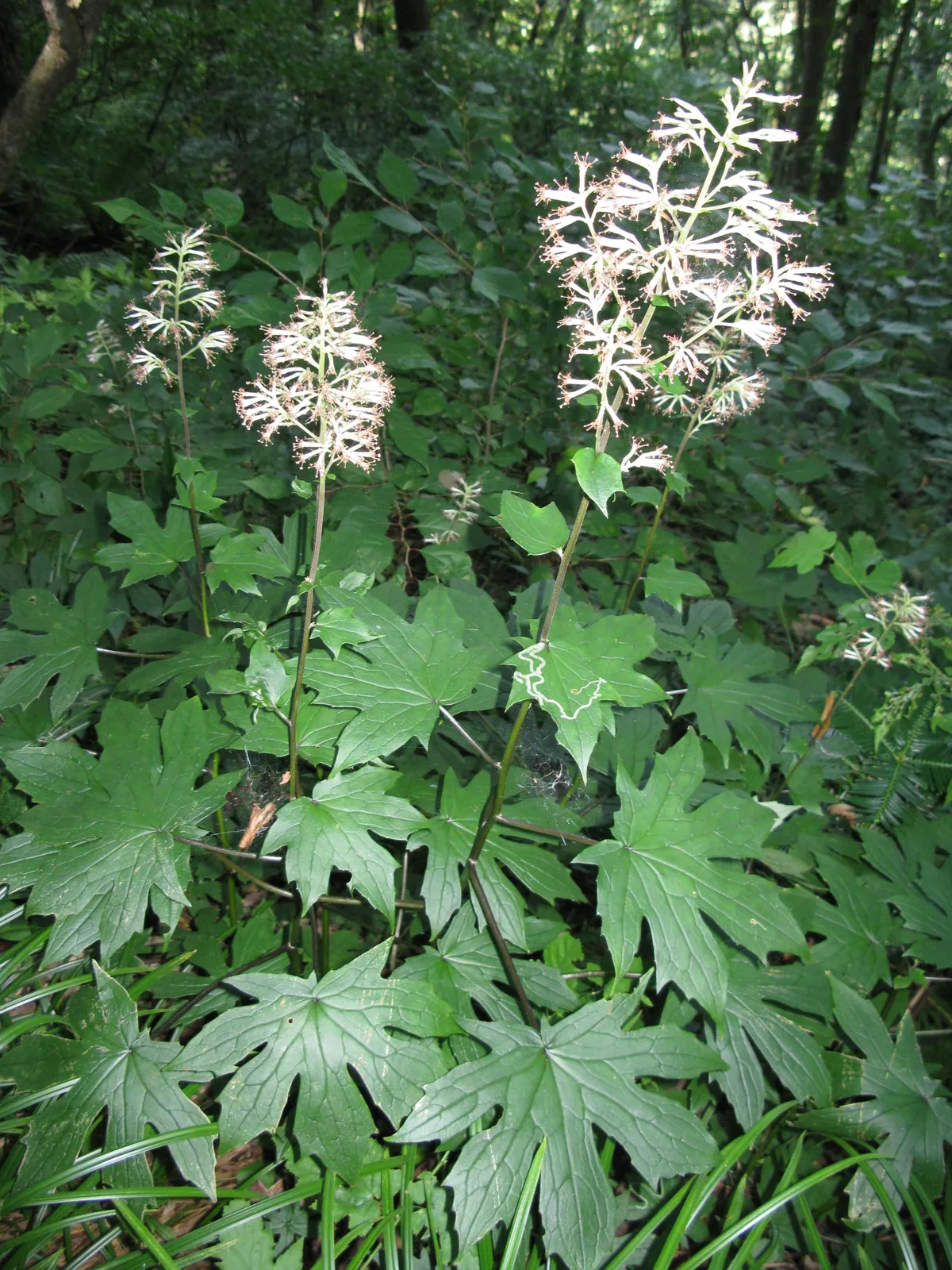
A plant in flower. Maple-like lobed leaves and white clustered flowers
Field observationShown: Parasenecio delphiniifolius (former genus name and synonym of Japonicalia delphiniifolia)Part / state: The whole above-ground part in the flowering period. Maple-like lobed leaves and several stems bearing white clustered inflorescences
Photo: Qwert1234 / Public domain / original image / ledger's original image
Scope and provenance of the photo
Identification: Identified as labelled in the source. The scientific name Japonicalia delphiniifolia in entities.csv is a synonym of Parasenecio delphiniifolius. The edible part is the young stems and leaves, but this photograph is a mature plant in the flowering period. It was photographed in the Tohoku region (Aizu, Fukushima), which matches geographically the phrase "called ... in the Tohoku region". A close-up of the inflorescence from the same file (_2) is also included as a reference candidate. I opened the image and confirmed. The whole plant is shown, with deeply lobed leaves resembling maple (momiji) and a white clustered inflorescence. The description says it was photographed in the Aizu region of Fukushima Prefecture
Image shown: The original from Wikimedia Commons, reduced to 2400 px on the long side. No cropping or color changes. For display, a WebP capped at 1200 px wide is served; the ledger's original image can be checked from the link above.
On this page (7 sections)
Reading the bitterness
Tohoku websites describe shidoke (momijigasa) as a wild green with a butterbur-like aroma and 「ほろ苦さ」 (in translation: "slight bitterness"). Leaves are limp and strongly flavored, stems soft yet with some bite; another article describes 「独特の香りとホロ苦さ、歯ざわりが特徴で、ちょっと大人向けの食材」 (in translation: "a distinctive aroma, slight bitterness, and mouthfeel; an ingredient somewhat for adults"). These are commercial descriptions, not sensory-panel results.
It is commonly introduced as boiled greens or tempura. Academic or official sources were not confirmed in this scope, so the record remains limited to commercial articles.
Sources for this overview
Checked for this overview: Used for the description of slight bitterness and texture. / Used for the ways of eating it as boiled greens and tempura.
Checked for this overview: Used for the evaluation as an ingredient for adults.
Other names: モミジガサ (ja)
Hypotheses and recipe candidates for this entry are on the Japanese page.
Structured claims — open a section to read each claim's confidence, evidence and limits
How processing and cooking change it (1)
Scope: Descriptions on Tohoku direct-sales ingredient websites
Note: Introduced as a standard way of eating it; regional and household differences are unknown from this material.
Show data
ingredient-shidoke —is_eaten_as→ (the claim sentence above)Culture (1)
Scope: Descriptions on 2 farm-direct and ingredient-introduction websites
Show data
ingredient-shidoke —has_sensory_attribute→ (the claim sentence above)