Xanthoxylum piperitum D.C.
ingredient / ingredient-sansho-fruit
山椒
Xanthoxylum piperitum D.C. is the fruit of sansho, used as the source material for sanshool in an original 1931 paper. The scientific name is preserved in the form used by that paper.
Photographs (captions in Japanese)
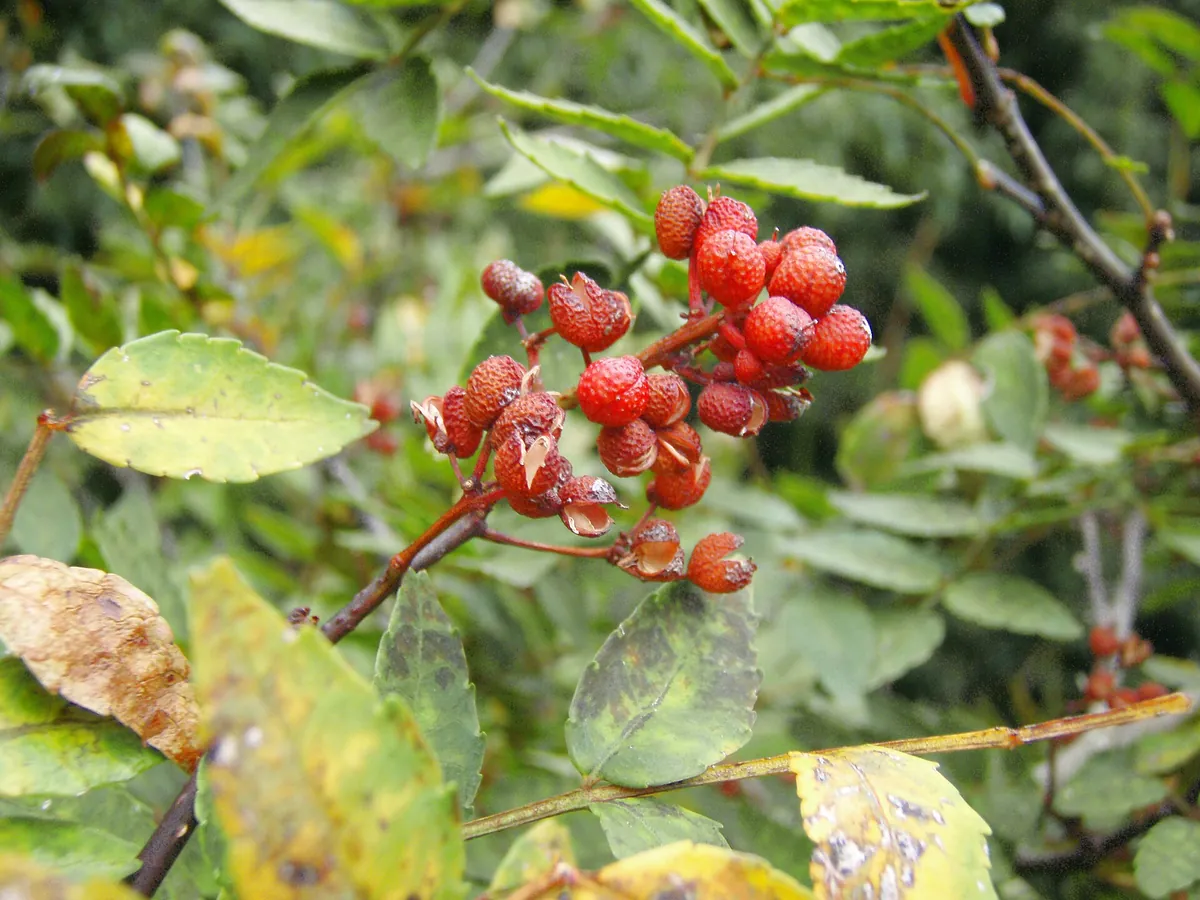
Fruit of sansho (Zanthoxylum piperitum). Red-brown fruits in clusters on a branch have ripened, and some have split open into husks with the seeds gone. Pinnate compound leaves are visible around them. The source page describes the subject as "ripe, split fruits of sansho".
Shown: Zanthoxylum piperitumPart / state: A cluster of fruit ripened on the branch, some split open. Some of the fruits have a red-brown skin split to show the inside
Photo: Togabi / CC BY-SA 4.0 / original image / ledger's original image
Scope and provenance of the photo
Identification: Identified as labelled in the source. The source page gives only the scientific species name Zanthoxylum piperitum and describes the part and growth stage as "ripe, split fruits". Re-identification by a specialist has not been done.
Image shown: The 1920 px version from Wikimedia Commons. No cropping or color changes by NIGAMI LAB. For display, a WebP capped at 1200 px wide is served; the ledger's original image can be checked from the link above.
On this page (7 sections)
Reading the bitterness
Sansho fruit was used as material for isolating sanshool, a pungent and tingling compound, in an original Japanese paper published in 1931. The paper says the fruit was extracted with ether, and the resulting crude sanshool was catalytically reduced, fractionated under reduced pressure, and decomposed to investigate its components. It names the material in period spelling as 「サンセウ Xanthoxylum piperitum D.C. の果實 山椒」 (in translation: "Sansho, fruit of Xanthoxylum piperitum D.C."). This scientific name retains the old spelling in the original and does not directly establish current taxonomic treatment.
In modern regional-food records, sansho berries are used whole. 「小あゆの山椒煮」 (in translation: "small ayu simmered with sansho"), recorded as a Shiga Prefecture regional dish, lists whole sansho berries and gives an example for 20 people using 20 g of berries with 1 kg of small ayu. These amounts are one recorded recipe example; they may differ by household or locality.
Sources for this overview
Checked for this overview: The portion checked describing ether extraction, catalytic reduction, fractionation, and decomposition of crude sanshool. / The portion checked containing the original material designation 「サンセウ Xanthoxylum piperitum D.C. の果實 山椒」 (in translation: "Sansho, fruit of Xanthoxylum piperitum D.C.").
Checked for this overview: The portion checked listing ingredients and quantities for 20 people for small ayu simmered with sansho.
Follow the connections
Xanthoxylum piperitum D.C. →contains→ hydroxy-alpha-sanshool (sanshool alkylamides) →can elicit→ tingling
Xanthoxylum piperitum D.C. →The fruit of is used as→ Xanthoxylum piperitum D.C.
small ayu simmered with sansho (koayu no sansho-ni) →uses→ Xanthoxylum piperitum D.C.
Structured claims — open a section to read each claim's confidence, evidence and limits
Composition and content (2)
Scope: Isolation study from 1931 original paper using the fruit of Japanese sansho Xanthoxylum piperitum D.C. as material.
Note: The original paper addresses crude sanshool and is positioned as a historical first step, not as modern chemical identification and quantification.
Show data
ingredient-sansho-fruit —contains→ compound-hydroxy-alpha-sanshoolScope: The description of sansho fruit in the original 1931 paper.
Note: The scientific name is kept in its old spelling from the original. Current taxonomic acceptance is not claimed from this source alone.
Show data
organism-xanthoxylum-piperitum —has_fruit_used_as→ ingredient-sansho-fruitCulture (1)
Scope: A record of regional cuisine within Shiga Prefecture.
Note: The ingredients for 20 people include 20 g of whole sansho berries with 1 kg of small ayu, but the quantities are only one example from this recipe.
Show data
dish-koayu-sansho-ni —uses→ ingredient-sansho-fruit