Acmella paniculata
organism / organism-acmella-paniculata
アクメラ・パニクラタ(在来センニチモドキ類)
Acmella paniculata is an Acmella species native to Thailand and the most widely distributed there. It is eaten as a wild leafy vegetable in northern Thailand and is likely the species actually meant by many Thai use records registered under the name A. oleracea.
Photographs (captions in Japanese)
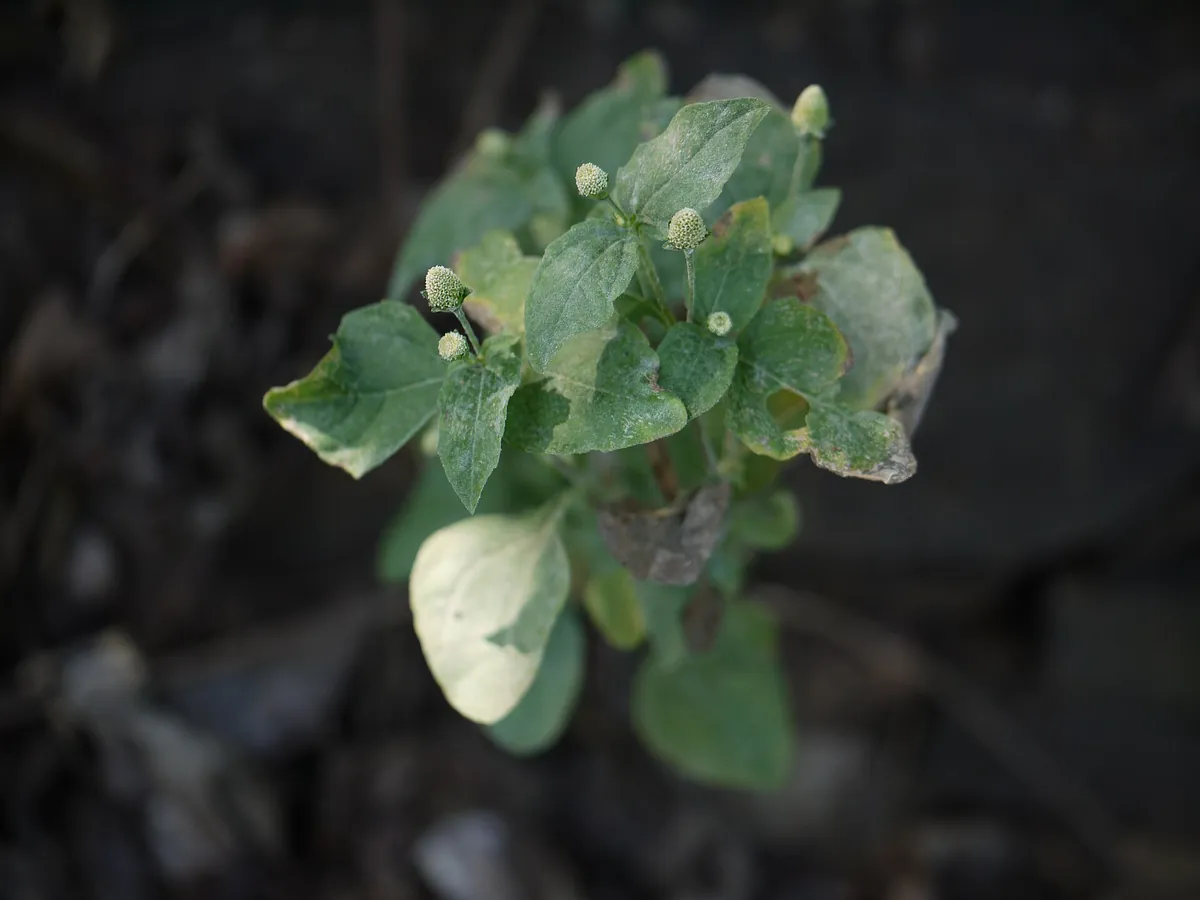
The tip of a branch of Acmella paniculata. Several small, conical, pale yellow-green flower heads, including buds, extend from between the ovate opposite leaves. The source page gives the scientific species name with the author citation.
Shown: Acmella paniculata (Wall. ex DC) R. K. JensenPart / state: Above-ground branch tips. Ovate leaves and several small, pale yellow-green conical flower heads (some still in bud)
Photo: Dinesh Valke (Thane, India) / CC BY-SA 2.0 / original image / ledger's original image
Scope and provenance of the photo
Identification: Identified as labelled in the source. The source page gives the scientific species name Acmella paniculata (Wall. ex DC) R. K. Jensen with the author citation. Re-identification by a specialist has not been done.
Image shown: The 1920 px version from Wikimedia Commons. No cropping or color changes by NIGAMI LAB. For display, a WebP capped at 1200 px wide is served; the ledger's original image can be checked from the link above.
On this page (7 sections)
Reading the bitterness
Acmella paniculata is a member of the Asteraceae family and the most widely distributed of the 2 Acmella species native to Thailand. The taste recorded in Thai accounts of this species is not bitterness but a pungent sensation. Much Thai phytochemical and ethnobotanical literature recorded uses of this group under the names Acmella oleracea or Spilanthes acmella; according to a taxonomic reassessment, nearly 80% of those records may have referred to the native A. paniculata.
In Karen and Lawa villages in Mae Chaem District, Chiang Mai Province, northern Thailand, this plant is eaten as a wild leafy vegetable. Its aerial parts are eaten raw with chili paste or cooked, and Karen people chew the roots to treat toothache, as recorded in the survey's species table (Table 1). The local names were recorded as Hor te mi in Karen and Tu plei in Lawa. This survey covered Karen and Lawa villages in Mae Chaem District, Chiang Mai Province, and did not confirm use by other ethnic groups or in other provinces. The survey is an ethnobotanical inventory accompanied by nutritional analysis of wild leafy vegetables, and chewing for toothache is a record in the use column of that table.
An ethnobotanical review summarizes its use in Lawa and Thai Yuan communities as a flavoring added to spicy vegetable soup, contributing a pungent flavor and citrus, spicy, and earthy aromas. Here, too, the taste descriptor is pungency rather than bitterness. The underlying primary record is not identified in the review, and taxonomic uncertainty about the species identification itself also remains relevant.
Sources for this overview
Taxonomy and ethnobotany of Acmella (Asteraceae) in Thailand
Checked for this overview: Checked in the main text the possibility that nearly 80% of use records referred to A. paniculata.
Checked for this overview: Checked in the main text that the taste is described as pungency, not bitterness. / Checked in the main text its use in spicy soup among Lawa and Thai Yuan communities.
Checked for this overview: Checked in the main text the records of food use and of use as a medicine from 2 Karen and 2 Lawa villages.
Follow the connections
toothache plant →Records of are often confl…→ Acmella paniculata
Structured claims — open a section to read each claim's confidence, evidence and limits
Composition and content (1)
Scope: Thai ethnobotanical and phytochemical literature; a taxonomic reassessment of Acmella in Thailand (6 species: 2 native and 4 introduced).
Show data
organism-acmella —is_often_conflated_in_records_with→ organism-acmella-paniculataHow processing and cooking change it (2)
Scope: Karen and Lawa villages in Mae Chaem District, Chiang Mai Province, northern Thailand.
Note: Recorded ethnic names: Hor te mi (Karen) and Tu plei (Lawa). This provides a basis for comparing an unidentified Chiang Mai leafy green with a native Acmella that is actually eaten in the region.
Show data
organism-acmella-paniculata —is_eaten_as→ (the claim sentence above)Scope: Lawa and Thai Yuan communities in northern Thailand.
Note: The first peer-reviewed record found of Acmella use in a soup context in northern Thailand. The review's sensory descriptor is pungency (pungent), not bitterness.
Show data
organism-acmella-paniculata —is_used_in→ (the claim sentence above)