spilanthol
compound / compound-spilanthol
スピラントール
Spilanthol is an unsaturated alkylamide abundant in Acmella oleracea.
Photographs (captions in Japanese)
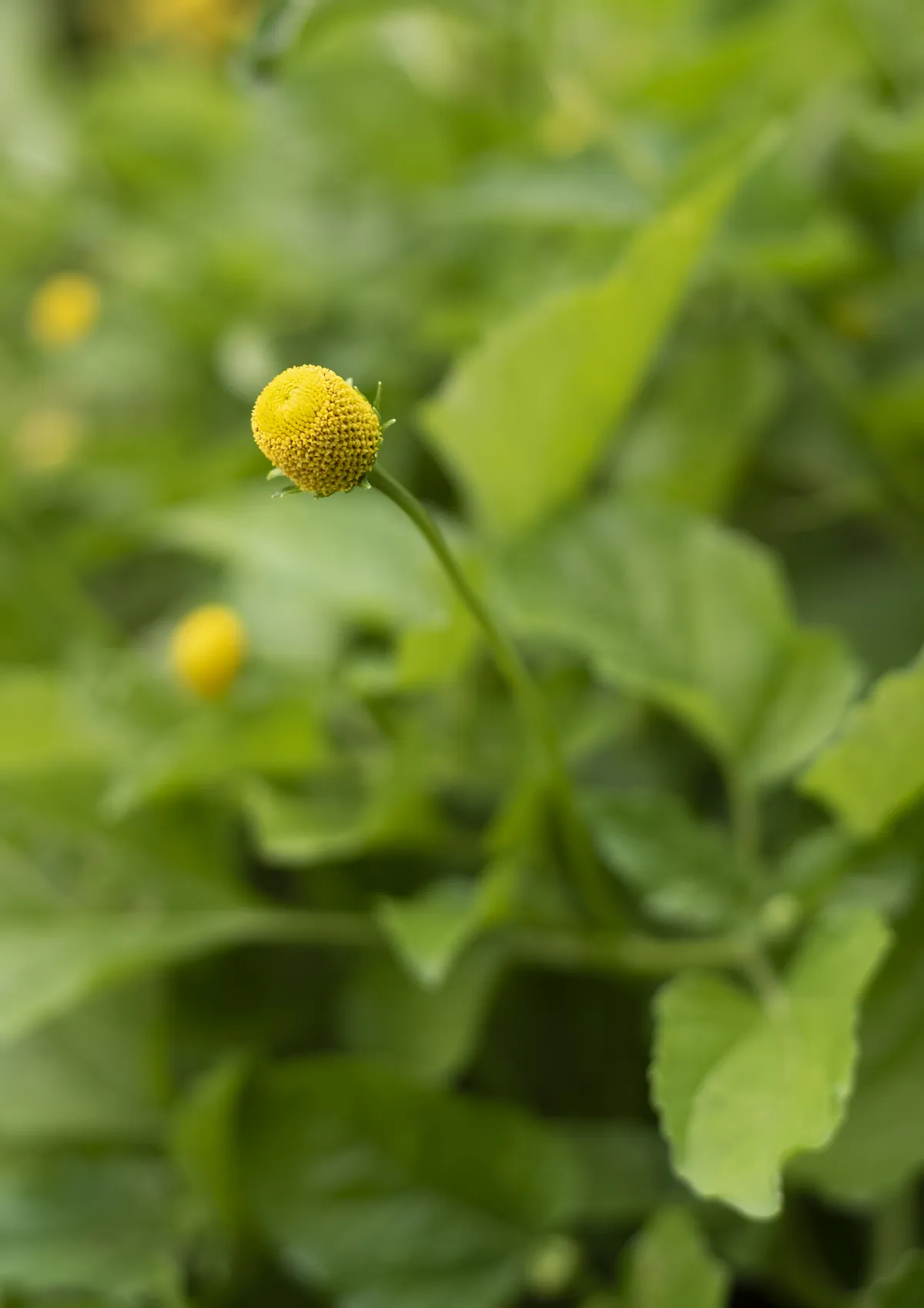
Flowers of Acmella oleracea (toothache plant, buzz buttons). Spilanthol is an unsaturated alkylamide abundant in this plant, and this is a photograph of the source plant, not of the compound itself.
Raw materialShown: Acmella oleracea (toothache plant)Part / state: Flower
Photo: Sixflashphoto / CC BY-SA 4.0 / original image / ledger's original image
Scope and provenance of the photo
Identification: Identified as labelled in the source. A different file from the photograph used for organism-acmella (to avoid duplication).
Image shown: The full-size file from Wikimedia Commons. No cropping or color changes by NIGAMI LAB. For display, a WebP capped at 1200 px wide is served; the ledger's original image can be checked from the link above.
On this page (8 sections)
Reading the bitterness
Spilanthol is an unsaturated alkylamide (a class of compounds derived from fatty acids) abundant in Acmella oleracea, a member of the Asteraceae family. There is no record in this database of this compound itself being a bitter taste component; rather, what is tracked is a distinct oral sensation separate from bitterness: a tingling, pungent, or numbing sensation in the mouth. When whole flower buds are placed in the mouth, an initial grassy flavor is recorded, followed by an intense numbing sensation, excessive salivation, and a cooling effect in the throat.
In an experiment using isolated taste receptor cells (TBCs) from mice, spilanthol was shown to enhance responses to sodium chloride (NaCl). When 1222 isolated taste cells were presented with NaCl and KCl and their responses measured by calcium imaging, 72.8% (134 of 184 cells) of the NaCl-responsive cells showed greater magnitude responses to a mixture of NaCl and spilanthol than to NaCl alone. Responses to 140 millimolar NaCl were significantly enhanced by 3 micromolar spilanthol, and the enhancement was concentrated in Type III cells. Enhancement in trigeminal neurons was minimal, and was significant only when 200 millimolar NaCl and 6 micromolar spilanthol were combined.
Tingling, pungency, and numbing are recorded as distinct sensations attributed by review articles to spilanthol and structurally related alkylamides. However, these descriptions appear only in the literature review section at the introduction of the studies, not in the experimental results. The experiments themselves, using taste receptor cells or trigeminal neurons, did not measure the tingling or numbing sensations felt in the human mouth. For saltiness enhancement as well, evidence in humans is limited to preliminary, unpublished observations using split-tongue methods, and the records caution against inferring human effects from these experimental results.
In reviews of Acmella oleracea research, spilanthol is positioned alongside other alkylamides as a central component in the botanical literature, and Thailand's Mahidol University plant information page lists it as a constituent of the same species. However, content varies greatly by plant part, geographic source, and extraction method, and a value of 16.50 milligrams per gram of dry weight has been reported for flower extracts. This content measurement is limited to summary-level confirmation, and the full text of a primary quantitative study supporting differences in content between plant parts has not yet been appended.
Sources for this overview
Checked for this overview: Confirmed the description from bud flavor to numbing sensation upon ingestion / Confirmed the description of review positioning spilanthol as a central component / Confirmed the example of 16.50 milligrams per gram content in flower extract
Spilanthol Enhances Sensitivity to Sodium in Mouse Taste Bud Cells
Checked for this overview: Confirmed the numerical values of response magnitude and significance levels in mouse taste cells / Confirmed the description of tingling as one of the sensations attributed / Confirmed the description of pungency as one of the sensations attributed / Confirmed the description of numbing as one of the sensations attributed / Confirmed the limitation that human split-tongue data is preliminary and unpublished
Checked for this overview: Confirmed the description from Thailand's plant information page listing it as a constituent
Follow the connections
spilanthol →is associated with→ tingling
spilanthol →is associated with→ pungency
spilanthol →is associated with→ numbing
Structured claims — open a section to read each claim's confidence, evidence and limits
Composition and content (1)
Scope: Acmella oleracea plant material as reviewed in the cited source
Note: Content varies with plant part, geographic source, and extraction method. These factors require measurement records. / 2026-08-31: calibration downgrade from established to supported because the supporting evidence does not derive from full-text confirmation. Eligible for re-upgrade after full-text verification.
Show data
organism-acmella —contains→ compound-spilantholSensory (4)
Scope: Acmella and spilanthol literature as summarized by cited sources
Note: Intensity, time course, and human dose-response have not yet been recorded here.
Show data
compound-spilanthol —is_associated_with→ (the claim sentence above)Scope: Oral spilanthol exposure as described in background sections of the literature
Note: Human time-intensity studies are still needed in this database.
Show data
compound-spilanthol —is_associated_with→ sensation-tinglingScope: Oral spilanthol exposure as described in background sections of the literature
Note: Human time-intensity studies are still needed in this database.
Show data
compound-spilanthol —is_associated_with→ sensation-pungentScope: Oral spilanthol exposure as described in background sections of the literature
Note: Human time-intensity studies are still needed in this database.
Show data
compound-spilanthol —is_associated_with→ sensation-numbingMechanism and receptors (1)
Scope: Mouse cells and trigeminal neurons at the micromolar concentrations tested
Note: Do not infer human saltiness enhancement effects from this experiment.
Show data
compound-spilanthol —enhanced→ (the claim sentence above)