bakkenolide B
compound / compound-bakkenolide-b
バッケノリドB
Bakkenolide B is a sesquiterpene spiro-γ-lactone diol ester (acetate and angelate forms) derived from fukinoto (butterbur shoot); initially named petasinolide, later renamed bakkenolide B; identical to the compound fukinolide.
Photographs (captions in Japanese)
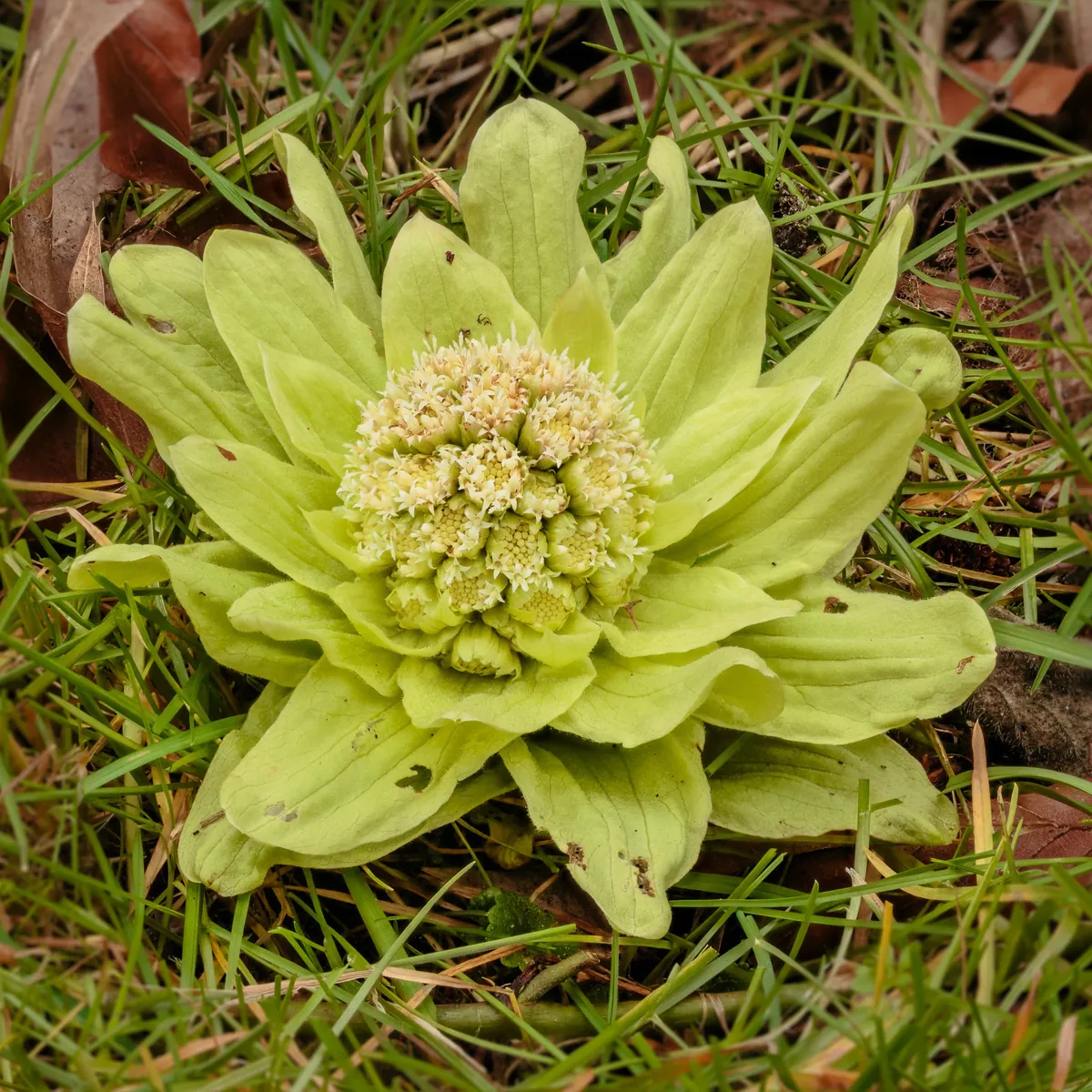
A flower bud of Japanese butterbur (Petasites japonicus), known as fukinotō. Bakkenolide B is a sesquiterpene compound derived from this plant, and this is a photograph of the source plant, not of the compound itself.
Raw materialShown: Petasites japonicus (Japanese butterbur, fukinotō)Part / state: Flower buds (fukinotō)
Photo: Dominicus Johannes Bergsma / CC BY-SA 4.0 / original image / ledger's original image
Scope and provenance of the photo
Identification: Identified as labelled in the source. A different file from the photographs used for ingredient-fukinoto and compound-pyrrolizidine-alkaloids (to avoid duplication).
Image shown: The full-size file from Wikimedia Commons, reduced to 2400 px on the long side with sips. No cropping or color changes by NIGAMI LAB (resizing only). For display, a WebP capped at 1200 px wide is served; the ledger's original image can be checked from the link above.
On this page (6 sections)
Reading the bitterness
Bakkenolide B is a lactone compound with a sesquiterpene skeleton found in fukinoto, bearing a diol structure esterified with both acetic acid and angelic acid. It was isolated as the principal bitter constituent from air-dried fukinoto collected around Sendai, after organic-solvent extraction and alumina chromatography. It forms white crystals with a melting point of 101–102°C, comprising approximately 0.1% of the air-dried plant. The researchers who isolated it initially named it petasinolide; however, because a similar name was already in use for a component of European Petasites species, they renamed it bakkenolide B by mutual agreement. A substance named fukinolide by another group of researchers is reported to be the same compound.
The description of this compound as the principal bitter constituent comes from the researchers who isolated it themselves, but no detailed description remains of how they evaluated the bitterness or what intensity they observed. A 2023 review again discusses bakkenolide B alongside bakkenolide A and fukinone as a major terpenoid of fukinoto; however, the review's concern there is with the compound's capacity to restore yeast growth, and it does not include discussion of bitterness itself.
Sources for this overview
Checked for this overview: Isolation conditions, melting point, and history of the name change confirmed in the body text. / Absence of documented bitterness evaluation method confirmed in the body text.
キク科山菜に含まれる機能性成分:野生植物として生き抜いてきた山菜の化学戦略を利用する
Checked for this overview: 2023 review's omission of any mention of bitterness confirmed in the body text.
Follow the connections
fukinoto (butterbur flower bud) →— principal bitter compound→ bakkenolide B
Structured claims — open a section to read each claim's confidence, evidence and limits
Composition and content (1)
Scope: Air-dried fukinoto collected around Sendai and studied by a group at Tohoku College of Pharmacy (1960s-1972)
Note: After the author initially named it Petasinolide, it was renamed Bakkenolide-B in consultation with Abe and Kitahara to avoid a name conflict with a European fuki constituent. It is the same substance as Naya et al.'s Fukinolide. Based on an expository article from a single research group; the primary experimental paper has not been read.
Show data
ingredient-fukinoto —has_principal_bitter_compound→ compound-bakkenolide-b