foie gras
ingredient / ingredient-foie-gras
フォアグラ
Foie gras: a French food ingredient made from the livers of fattened geese or ducks. This entry does not address controversy over production methods, animal welfare, or regulation, and addresses only descriptions concerning bitterness.
Photographs (captions in Japanese)
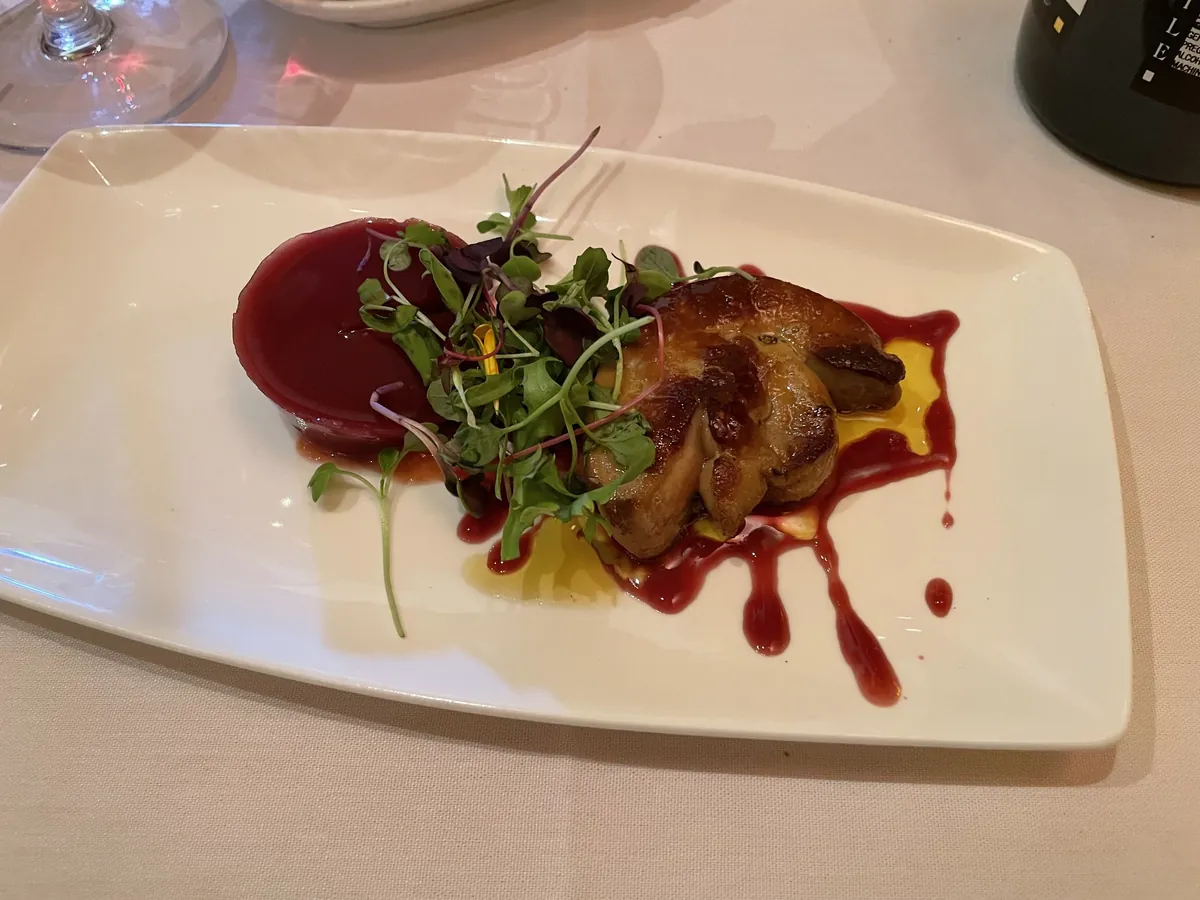
A single piece of seared foie gras. Served with the browned side up, accompanied by a red sauce and a yellow sauce
Prepared formShown: Duck (written in the source as Seared duck foie gras)Part / state: A piece of seared (sautéed) foie gras. A thick single slice served on a plate
Photo: ZhengZhou / CC BY-SA 4.0 / original image / ledger's original image
Scope and provenance of the photo
Identification: Identified as labelled in the source. The description clearly states "Seared duck foie gras with aspic & Port wine". Own work. I opened the image and confirmed. A thick, browned piece is served on a plate with a red sauce and a yellow sauce
Image shown: The original from Wikimedia Commons, reduced to 2400 px on the long side. No cropping or color changes. For display, a WebP capped at 1200 px wide is served; the ledger's original image can be checked from the link above.
On this page (5 sections)
Reading the bitterness
Raw foie gras has veins (veines), and a home-cooking guide by a French foie gras producer recommends carefully removing them before heating and cooking, a preparation step called déveinage. One producer explains that if the veins remain, they may give foie gras a slight bitterness. This is the producer's own explanation; it neither chemically identifies the component causing the bitterness nor measures it by sensory evaluation.
A cooking guide on another French producer's official website likewise states that, without this preparation, raw foie gras may develop bitterness and that the cause lies in the veins. It is notable that 2 independent producers agree in attributing the source of bitterness to the veins themselves rather than to the gallbladder itself; however, a shared limitation is that both accounts remain explanations based on producers' experience, without identification of bitterness components or quantitative sensory measurement.
Sources for this overview
Déveiner votre foie gras facilement
Checked for this overview: The producer's explanation of the relation between veins and bitterness.
Comment préparer et servir le foie gras cru ?
Checked for this overview: Introduces the similar explanation of bitterness by another producer.
Structured claims — open a section to read each claim's confidence, evidence and limits
Sensory (1)
Scope: Home-cooking guides from 2 French foie gras producers
Note: Debates over animal welfare and production regulation are not addressed here; only descriptions concerning bitterness are taken up. 2 independent producers agree in attributing the cause of bitterness not to the gallbladder itself but to the veins (veines).
Show data
ingredient-foie-gras —has_perceived_bitterness_associated_with→ (the claim sentence above)