chilhuacle (chile huacle)
ingredient / ingredient-chilhuacle-chile
チルワクレ / Capsicum annuum
Chilhuacle (chile huacle) is a chile from Cañada Chica around Cuicatlán in the Cañada region of Oaxaca. It is smoked over firewood and dried. There are 3 lines—black, red, and yellow; chilhuacle negro is described as a core ingredient of mole negro.
Photographs (captions in Japanese)
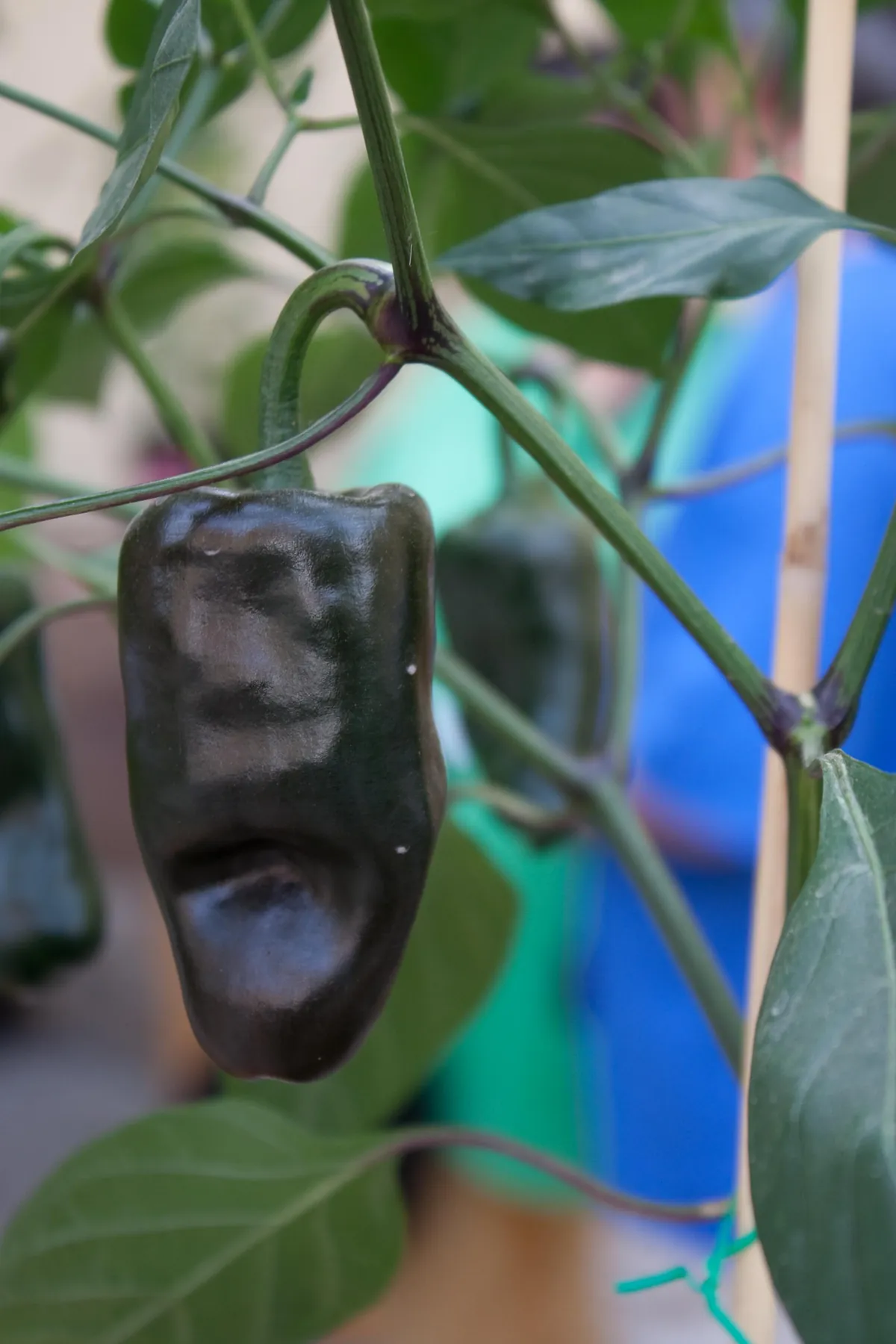
Dried fruit of chilhuacle negro, a chile native to the Cañada region of Oaxaca. Of the 3 types (black, red, and yellow), the black chile is regarded as a core ingredient of mole negro.
Shown: Capsicum annuum (chilhuacle negro cultivar group)Part / state: Dried fruit
Photo: d_bob / CC BY-SA 2.0 / original image / ledger's original image
Scope and provenance of the photo
Identification: Identified as labelled in the source. A photograph of the black line (negro). The red and yellow lines are not shown.
Image shown: The full-size file from Wikimedia Commons. No cropping or color changes by NIGAMI LAB. For display, a WebP capped at 1200 px wide is served; the ledger's original image can be checked from the link above.
On this page (9 sections)
Reading the bitterness
Chilhuacle (chile huacle) is described as a compound of Nahuatl chilli (chile) and ezcahuaqui or tlahuatzalli (dried), or huaqui (dry), meaning a chile smoked and dried over firewood. Cabrera proposed this etymology; a 2023 literature review introduces it through the thesis of Radix-Hernández (2008). However, the review also lists the variant forms chile huacle, chilli huactli, and huaqui chilli, and the etymology has not been established as a single accepted account.
The same literature review explains that the candidate roots tlahuatzalli, ezcahuaqui, and huaqui all refer to 「chile secado con humo de leña(薪の煙で燻し乾燥させたチレ)」 (in translation: "chile dried by smoking with firewood"). The name chilhuacle is thus described as etymologically implying the method of smoking and drying the chile over firewood.
The review, including interviews with producers and chefs, lists smoked (ahumado), fruity (afrutado), and slightly spicy (ligeramente picoso) as chilhuacle characteristics, and also notes that its shape and texture are retained after drying. It contains no explicit description of bitterness.
The review states that these flavor characteristics give mole negro an especially distinctive character and positions chilhuacle as indispensable to the dish. A chile originating in Cañada Chica, Oaxaca, is an example of a local ingredient forming the core of a representative regional dish.
Sources for this overview
Checked for this overview: Confirmed the Nahuatl etymology and the parallel variant spellings. / Confirmed the etymological implication of smoking and drying over firewood. / Confirmed the sensory descriptions of smoke, fruitiness, and slight spiciness. / Confirmed its positioning as indispensable to mole negro.
Other names: chilhuacle (es), chilli huactli (nah, identification medium)
Follow the connections
mole negro →includes→ chilhuacle (chile huacle)
Structured claims — open a section to read each claim's confidence, evidence and limits
Composition and content (1)
Scope: Cañada Chica around Cuicatlán, Oaxaca
Show data
ingredient-chilhuacle-chile —has_name_etymology→ (the claim sentence above)Sensory (1)
Scope: A literature review including interviews with producers and chefs in the growing region.
Note: The source contains no explicit bitterness description. Bitterness of mole negro as a whole may more likely derive from other ingredients such as charred tortillas and chocolate.
Show data
ingredient-chilhuacle-chile —has_sensory_attribute→ (the claim sentence above)How processing and cooking change it (2)
Show data
ingredient-chilhuacle-chile —is_processed_by→ (the claim sentence above)Scope: A chile from the Cañada region of Oaxaca, regarded as essential to mole negro
Note: Connects, for the first time, a sourced composition claim to the existing candidate entity dish-mole-negro.
Show data
dish-mole-negro —includes→ ingredient-chilhuacle-chile