Chenopodium triterpenoid saponins
compound class / compound-class-chenopodium-saponins
アカザ属のトリテルペンサポニン
Oleanolic acid-based triterpenoid saponins found in seeds and flower clusters of the genus Chenopodium. They are described as having bitterness and surfactant activity.
Photographs (captions in Japanese)
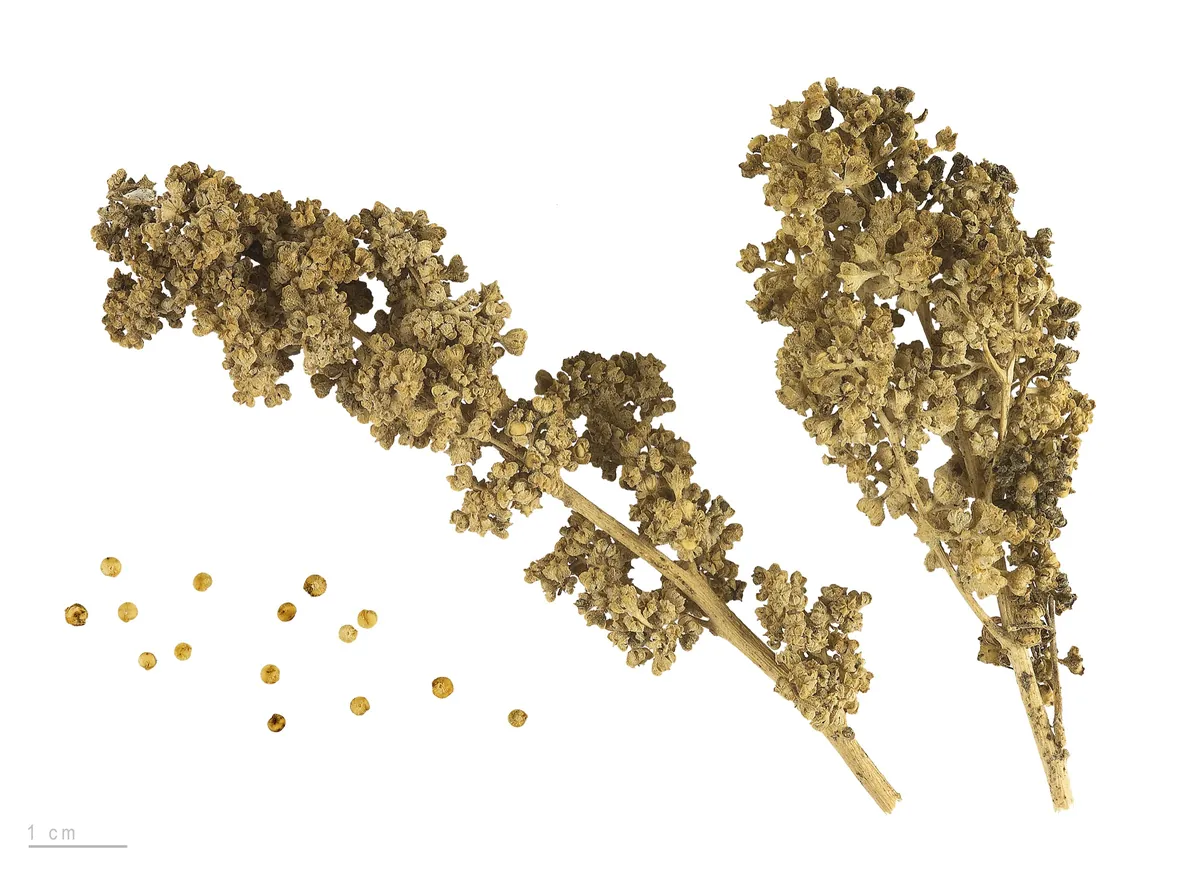
A pressed plant specimen of Chenopodium quinoa (quinoa). Triterpenoid saponins are contained in the seeds and inflorescences of the genus Chenopodium, but since there was no good photograph of the target Chenopodium album itself, a specimen photograph of quinoa, well documented in the same genus, was adopted as a substitute.
Raw materialShown: Chenopodium quinoa (quinoa; species as stated on the specimen label)Part / state: Pressed plant specimen of an inflorescence with seeds
Photo: Roger Culos / CC BY-SA 3.0 / original image / ledger's original image
Scope and provenance of the photo
Identification: Identified as labelled in the source. Not a photograph of Chenopodium album itself but a specimen of a species of the same genus.
Image shown: The full-size file from Wikimedia Commons, reduced to 2400 px on the long side with sips. No cropping or color changes by NIGAMI LAB (resizing only). For display, a WebP capped at 1200 px wide is served; the ledger's original image can be checked from the link above.
On this page (7 sections)
Reading the bitterness
Chenopodium seeds contain triterpenoid glycosides based on oleanolic acid scaffolding, namely saponins. A 2025 paper on the flower clusters of Chenopodium berlandieri subsp. nuttalliae (huazontle) cites prior research (Lazo-Vélez et al. 2016) and reports that when germinated seeds were examined using a technique combining chromatography and mass spectrometry, 12 triterpenoid saponins were detected, with the major sapogenins (the non-sugar portion after removal of the sugar chain) being oleanolic acid and hederagenin. However, this description is a summary of prior research; what the paper itself newly isolated were individual saponins from flower cluster extract.
The same paper characterizes Chenopodium saponins generally as having bitterness and surfactant activity (the property of bringing water and oil into contact). This is not a direct record of sensory testing, but rather background description summarizing prior literature as a genus-level characterization, with no specific test conditions such as concentration or panel size given.
This genus-level description is not a sensory test of the edible flower clusters of huazontle themselves. The same paper that isolated and analyzed saponins in the flower clusters cites Chenopodium genus saponin bitterness as background species information, but this is merely a secondary citation; it is not a measurement result from actually tasting the flower clusters. Attention should be drawn to the fact that the description of high concentration in the seed outer layer is also a secondary citation from prior research focused on seeds, not a direct showing of the distribution in flower clusters.
Sources for this overview
Checked for this overview: Confirmed detection of 12 triterpenoid saponins and sapogenin composition from prior research summary. / Confirmed genus-level general description of bitterness and surfactant activity. / Confirmed that this is not a sensory test of the flower clusters themselves, but a generalization of genus-level description.
Follow the connections
Chenopodium triterpenoid saponins →occurs in→ huazontle / quelite cenizo
Chenopodium triterpenoid saponins →— sensory attribute→ bitterness →can be measured separately …→ astringency
huazontle inflorescence →— bitterness is attributed …→ Chenopodium triterpenoid saponins
Structured claims — open a section to read each claim's confidence, evidence and limits
Composition and content (1)
Scope: High concentration in seed outer layers is reported (summary of Lazo-Vélez 2016 and other published results).
Note: The paper's own newly isolated subjects were individual saponins (compounds 1 and 6) in flower cluster extract; this is review-type background description.
Show data
compound-class-chenopodium-saponins —occurs_in→ organism-chenopodium-berlandieri-nuttalliaeSensory (2)
Scope: "Las saponinas del género Chenopodium se caracterizan por poseer un sabor amargo y propiedades surfactantes"(in translation: "Saponins of the Chenopodium genus are characterized by having a bitter taste and surfactant properties") — a genus-level generalization in the paper.
Note: Not a direct record of sensory testing, but background description summarizing prior literature.
Show data
compound-class-chenopodium-saponins —has_sensory_attribute→ sensation-bitterScope: Positioning of genus (Chenopodium) level saponin description as generalization to the edible flower clusters of huazontle.
Note: A limitation is that this is not a sensory test of the flower clusters themselves.
Show data
ingredient-huazontle-inflorescence —has_bitterness_attributed_to→ compound-class-chenopodium-saponins