bitter kola
organism / organism-garcinia-kola
ビターコーラ / Garcinia kola
Bitter kola is a tree of the St. John's wort family (Clusiaceae) found in humid forests of western and central Africa. Its seeds, called "bitter kola", are chewed as a recreational product and also substitute for kola nuts offered to guests at social ceremonies.
Photographs (captions in Japanese)
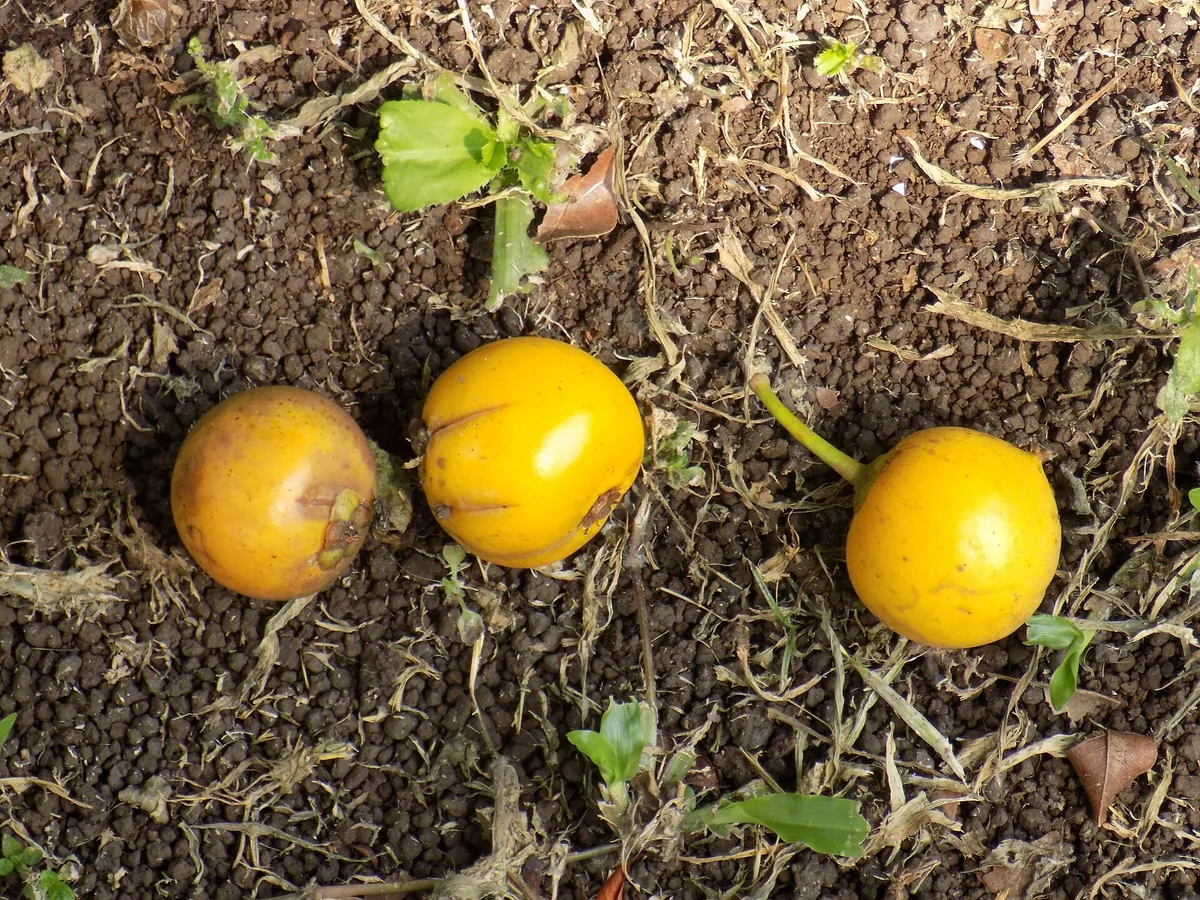
3 ripe fruits of bitter kola (Garcinia kola) lying on the ground. They have round, glossy yellow-orange rinds. Photographed at the Limbe Botanic Garden in Cameroon. The source page gives the scientific species name Garcinia kola and the Cameroonian common name "Bitter cola".
Shown: Garcinia kolaPart / state: Fruit that ripened and fell. 3 round fruits with yellow-orange rinds lying on the ground
Photo: Hiobson / CC BY-SA 4.0 / original image / ledger's original image
Scope and provenance of the photo
Identification: Identified as labelled in the source. The source page gives the scientific species name Garcinia kola and lists "Bitter cola" as the common name in Cameroon. The shooting location is the Limbe Botanic Garden, Cameroon. What is shown is the fruit, and the seeds (nuts) chewed as a recreational item are inside this rind. Re-identification by a specialist has not been done.
Image shown: The 1920 px version from Wikimedia Commons. No cropping or color changes by NIGAMI LAB. For display, a WebP capped at 1200 px wide is served; the ledger's original image can be checked from the link above.
On this page (7 sections)
Reading the bitterness
Garcinia kola, a tree growing in the humid forests of western and central Africa, has seeds commonly called 「ビターコーラ」 (in translation: "bitter kola"). A review describes the seeds as something chewed for enjoyment and as a substitute for kola nuts offered to guests at social gatherings. The common-name element 『ビター』 (in translation: "bitter") itself suggests bitterness, but the source includes no sensory measurement quantifying its intensity.
A biflavonoid mixture comprising three constituents, GB1, GB2, and kolaflavanone, has been isolated from the seeds; it is called kolaviron. However, the source states no direct relationship between those constituents and bitterness, so one cannot say that kolaviron causes the bitterness. This source alone cannot connect the bitterness suggested by the name with the constituents actually isolated.
Sources for this overview
Antioxidative and Chemopreventive Properties of Vernonia amygdalina and Garcinia biflavonoid
Checked for this overview: Checked the common name 『bitter kola』 and its ceremonial use. / Checked the composition of kolaviron isolated from the seeds.
Follow the connections
kolaviron →is isolated from→ bitter kola
Structured claims — open a section to read each claim's confidence, evidence and limits
Composition and content (1)
Note: No direct correspondence with bitterness is given in the source, so none is asserted.
Show data
compound-kolaviron —is_isolated_from→ organism-garcinia-kolaCulture (1)
Scope: Western and central Africa.
Note: The common name "bitter kola" itself indicates bitterness, but sensory measurements of bitterness intensity have not been collected.
Show data
organism-garcinia-kola —is_used_as→ (the claim sentence above)